Automatic Gate Repair in Tempe, AZ

A gate that has stopped opening, a remote that only works from a few feet away, or a slide gate that sticks in the same spot every time. Most of it comes back to power or a sensor rather than a dead motor. Free estimates, with a firm price in writing.

Call (480) 470-8551 Get Your Free Estimate
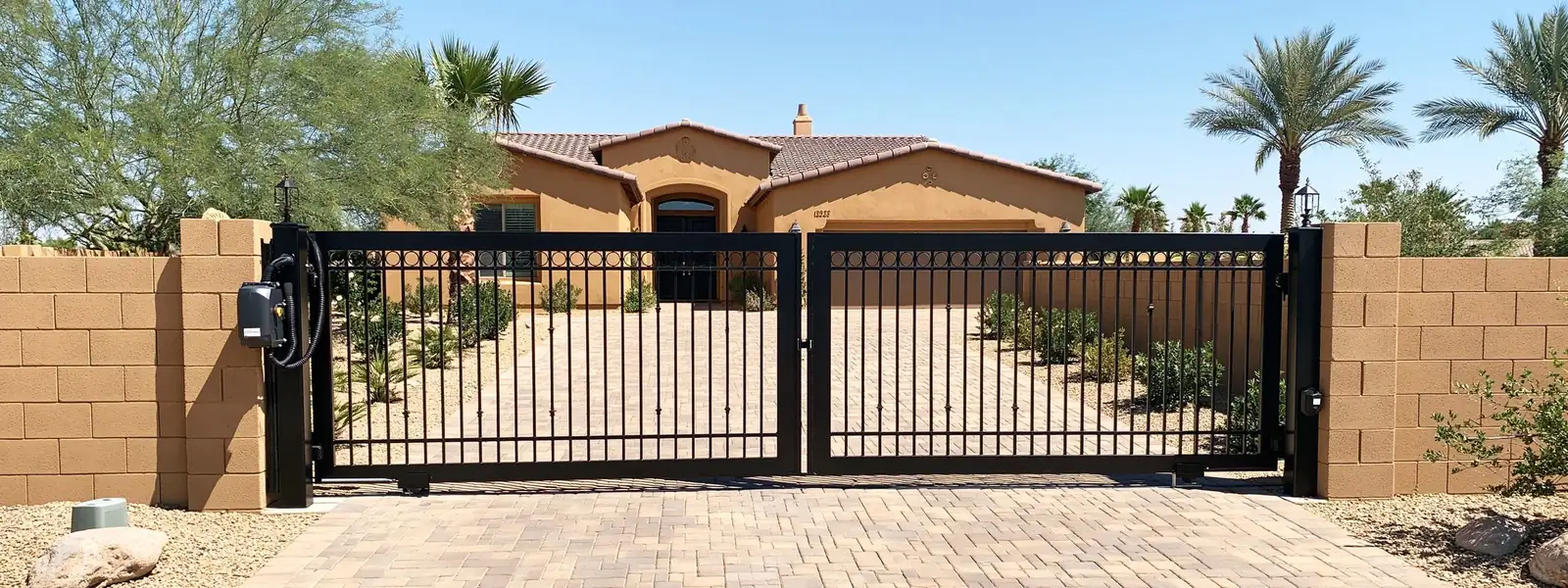
Automatic gate repair in Tempe, AZ, a black iron driveway gate closed square across a paver drive between block wall pillars with the operator mounted at the post

Driveway Gates That Open on the First Try

A powered gate is the part of a property you use every day without thinking about it, and the part you notice the second it stops. Tempe Fence Company works on driveway gates across Tempe and the East Valley: swing gates, slide gates, the openers that move them, and the remotes, keypads and sensors that tell them what to do.

Automatic gate repair in Tempe starts with one question, worth asking before anyone quotes you a new opener. Is the motor actually the problem? A gate that has gone quiet is usually reporting something else: power no longer reaching it, a sensor that believes the driveway is blocked, a remote battery cooked by a Tempe summer, or grit packed into a track.

Someone comes out, works through it from the cheapest cause to the most expensive, and tells you plainly what it needs. You get a price in writing before anything is booked. The visit is free, and there is no obligation.

Why Automatic Gates in Tempe Stop Working

A driveway gate here does a job most gates in the country never have to do. It stands in full sun for months, swallows dust every time the wind comes up, and runs on electronics that live outdoors all year. None of that means anything was built badly. It is the climate the gate works in.

That is why the same short list of causes comes up again and again on Tempe driveways, and why most of them are small. A gate that has stopped moving is more often a power or sensor problem than a worn out motor.

Heat is hard on the electronics

Summer here is hard on anything that runs on a battery. The remote lives in a car parked outside, in a glove box hotter than the air, and gives up long before you would expect. Keypads catching the afternoon sun go the same way. A keypad that works at seven in the morning and not at four is telling you exactly that.

The opener itself sits in a box beside the driveway, warm every summer afternoon. Most units cope. The ones that struggle stand in direct sun with nothing over them, and shading that box is sometimes most of the repair.

Then there is power. Storms knock out circuits, breakers trip, and the wiring running underground out to a gate is the part nobody has looked at in ten years. A gate that is completely dead, no lights and no sound, is a power question first.

Dust and grit find the moving parts

A slide gate rolls along a track at driveway level, in a city where the wind carries sand. Grit packs into that track until the gate has to climb over it instead of rolling through it. The motor keeps pushing, the gate shudders or stops partway, and the part everyone blames is the motor.

The wheels wear the same way. Once a wheel has worn flat on one side it drags rather than turns, and the gate gets heavier every month. Clearing a track and replacing worn wheels is ordinary maintenance, and it is often the difference between a gate that struggles and one that runs quietly again.

Swing gates have their own version. The hinges carry the whole weight of the gate out on an arm, so once a hinge or its post moves even slightly, the gate develops a heavy spot partway through its travel that the opener shoves through every time.

Signs Your Automatic Gate Wants a Look

The gate stops or reverses at the same point in its travel every time
The motor runs but the gate barely moves, or moves in short bursts
A slide gate shudders or drags through one stretch of the driveway
Remotes only work when you are almost at the gate, or not at all
The keypad lights up but nothing happens when you enter the code
You have started leaving the gate open because it is easier than fighting it

Repair the Gate, or Replace the Opener?

Replacing the opener is where most people land first, because it is the part with a brand name on it and the part that looks like it stopped. It is also the most expensive item on the list, and often it is not what is wrong.

The check that settles it takes a minute. Every powered gate has a way to release the motor so the gate can be moved by hand. Released, the gate should travel its whole length under light, even effort. If it gets heavy, catches, or drifts back, the gate is the problem, and a new opener would spend its life fighting it.

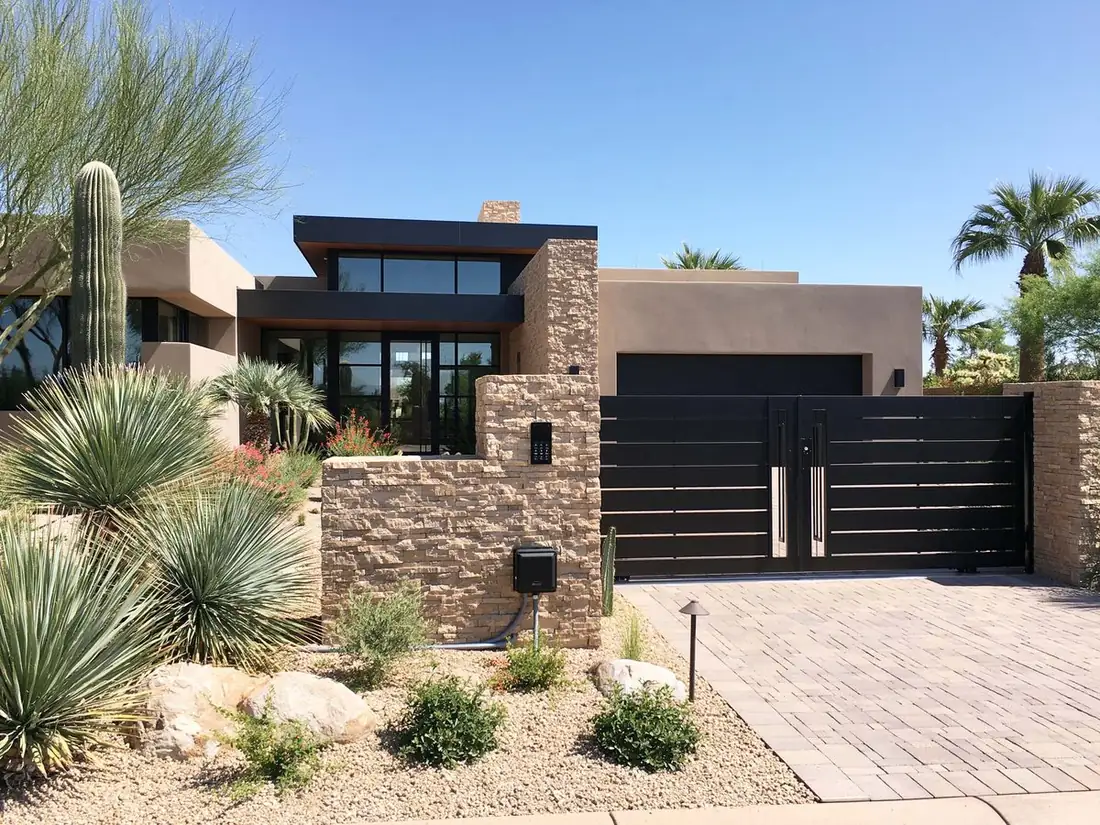
Keypad and gate operator mounted on a stone pillar beside a black automatic driveway gate at a modern Tempe, AZ home

When the fix is the gate, not the motor

An opener is sized to move a gate that swings or rolls freely. Give it one that binds and it does what it was built to do. It works harder, then stops and reports a problem rather than forcing through. From the driveway that looks identical to a broken opener.

Underneath, the cause is usually simple. A hinge post that has shifted, a gate that has dropped at the far end, a wheel riding on packed grit, or a guide knocked out of line by a delivery truck. Put the alignment back and the same opener runs the gate without complaint. It is the cheaper repair by a wide margin, and it holds, because nothing is being asked to overpower anything.

The gate itself, meaning hinges, posts, latches and sagging leaves on gates with no motor at all, is covered on gate repair.

When the opener really has reached the end

Sometimes it has, and you should be told that just as plainly. Gears wear out, and an opener that has spent years pushing a heavy gate wears out sooner. Older units reach a point where parts are no longer made. Where that is the case you hear it, and you hear why, rather than being handed a replacement because it is the easy sale.

When a new opener is the right call, it is worth doing once and doing it for the gate you actually own. Weight, width, swing or slide, how often it opens, and whether it has to keep working through a power outage all decide which unit belongs on your driveway. An opener a size too small is how this cycle starts over in a few years.

What Moves the Price on an Automatic Gate Repair

Nobody can price this over the phone, because one symptom has half a dozen possible causes and they are not the same size of job. These are the things that actually move the number.

The estimate you get back is a firm price in writing covering exactly what the work includes, so you can hold it up against anyone else's on equal terms.

What the visit looks at

  1. Whether the fault is electrical, or the gate itself is binding
  2. Whether the gate swings or slides, and how heavy and wide it is
  3. Whether the track, the wheels or the hinges need work
  4. How many remotes, keypads and sensors are part of the system
  5. How power reaches the gate, and how much of that run needs replacing
  6. Whether a gate post or its footing has to be reset

What an Automatic Gate Repair Involves

Safety sensors, and why they are worth fixing properly

Every powered gate watches the space it is closing into. There is a sensor across the opening whose only job is to stop the gate if something is in the way. When that sensor gets knocked out of line, or dust settles on its face, or a connection corrodes, it starts stopping the gate for no reason you can see. The gate holds open, or closes a foot and comes back.

That is annoying, and the quick way around it is to switch the sensor off. It is worth saying once, plainly: that sensor is the part that stops a closing gate on a car or on a child, so it is the one item to put right rather than work around. Realigning it or replacing a corroded connection is a small job, and it puts the gate back to closing on its own.

Adding automation to a gate you open by hand

Plenty of gates in Tempe were built without a motor and would be better with one. Adding automation to a gate that is already standing is usually possible, and what it takes comes down to the gate you have:

  • Whether the gate can take the extra work, because a motor opens a gate far more often than a person does, and a tired hinge shows up quickly once it does.
  • Where the power comes from, which is either a run out from the house or a solar panel and battery mounted at the gate.
  • How you want it opened, with a remote in each car, a keypad at the driveway, your phone, or some combination of those.
  • What happens in a power outage, so a summer storm does not leave you parked on the street.

Whichever applies, it goes in the written estimate before work starts: what is being done, what it costs, and what happens if something else turns up.

Automatic Gate Questions, Answered Plainly

Why does my automatic gate open but not close?

Nine times out of ten a safety sensor is holding it. The sensor watching the opening thinks something is in the way, either because something is or because it has been knocked out of line, coated in dust, or lost a connection. Gates are built to stay open rather than close on an obstruction, so a confused sensor keeps the gate open. The other common cause is mechanical. Closing is the direction that gate binds in, so the opener meets resistance and stops. Both are ordinary repairs, and neither is a reason to switch the sensor off.

My gate is completely dead. Where does that start?

With power, always, because it is the cheapest thing to rule out and it is right a lot of the time. The breaker that feeds the gate, any switch at the opener itself, and whether the unit shows any light at all. Storms and outages take out circuits, and the wiring buried out to a driveway gate is the part nobody inspects. If you can tell us whether you see lights on the opener when you press the remote, you have already shortened the visit. Openers do fail, but they are the last thing worth condemning.

Do I need a new opener, or can this one be repaired?

The by hand test decides it, and you can do it yourself in a minute. Release the motor, then move the gate through its full travel. If it runs light and even the whole way, the opener is worth looking at. If it gets heavy, catches, or drifts back on its own, the gate is what needs work, and a new opener would inherit the same fight. Where an opener really is finished, usually worn gears or parts no longer made, you are told that and told why before anything gets ordered.

Why do my gate remotes and keypad keep dying?

Heat, mostly. A remote lives in a car that parks outside in a Tempe summer, and batteries in that environment do not last the way the packaging suggests. Keypads mounted where the afternoon sun lands get the same treatment, and a keypad that works early and fails late in the day is the clearest version of that. Start with fresh batteries before assuming a fault. If one remote works and another does not, it is the remote. If nothing works from the driveway but the button inside the garage does, it is the receiving side.

Can you automate a gate I currently open by hand?

Usually, yes. The gate has to be in good enough condition to take it, because a motor cycles a gate many more times a day than a person does and it finds a worn hinge quickly. After that it is three decisions: how power reaches the gate, either run out from the house or a solar panel and battery at the gate, how you want to open it, and what happens during an outage. All three get priced in the written estimate. If the gate needs work first, you hear that before you commit.

Do you work on gates you did not install?

Yes, and most of the gates we get called to were installed by somebody else, often years ago. It does not matter who put it in or what brand is on the opener. What matters is what the gate is doing now and whether parts for it are still available, and both get checked before any number is quoted. If a system is old enough that parts have become a problem, you are told up front, so you can decide rather than pay for a repair that holds until the next thing fails.

See all fence and block wall questions →

Related Work in Tempe

Gate Repair

Hinges, posts, sag and latches on gates with no motor, where a lot of opener trouble begins.

See Gate Repair →

Wrought Iron Fencing

Most powered driveway gates in the Valley are iron, and iron gives up at the bottom first, where the sprinklers land.

See Wrought Iron Fencing →

Block Wall Construction

The pillars on either side of a driveway gate carry it. Building them for a gate now beats opening the wall later.

See Block Wall Construction →

Gates in Scottsdale

Longer driveways and more powered gates, with the same heat on the same electronics.

Fencing in Scottsdale →

Gates in Gilbert

Ground that swells and shrinks moves gate posts, and a powered gate notices first.

Fencing in Gilbert →

Not sure what you need?

Tell us what the gate is doing and we will tell you what it needs. The visit is free either way.

Get in touch →
Automatic driveway gates in Tempe, AZ standing fully open at sunset, both leaves level, with palms and a paver drive running through

Get Your Free Estimate

Tell us what the gate is doing and whether it swings or slides. That, plus whether you see any lights on the opener, is most of the diagnosis. Someone comes out, works through it and gives you a firm price in writing. No cost, no obligation. Call (480) 470-8551 or fill out the form.

A gate that stopped is rarely a dead opener.

Call (480) 470-8551