Block Wall Repair in Tempe, AZ

Cracked block, a section that has started to lean, or a wall that no longer runs true along the property line. Most of it can be repaired where it stands, and matched closely enough that you have to look for the seam.

Call (480) 470-8551 Get Your Free Estimate
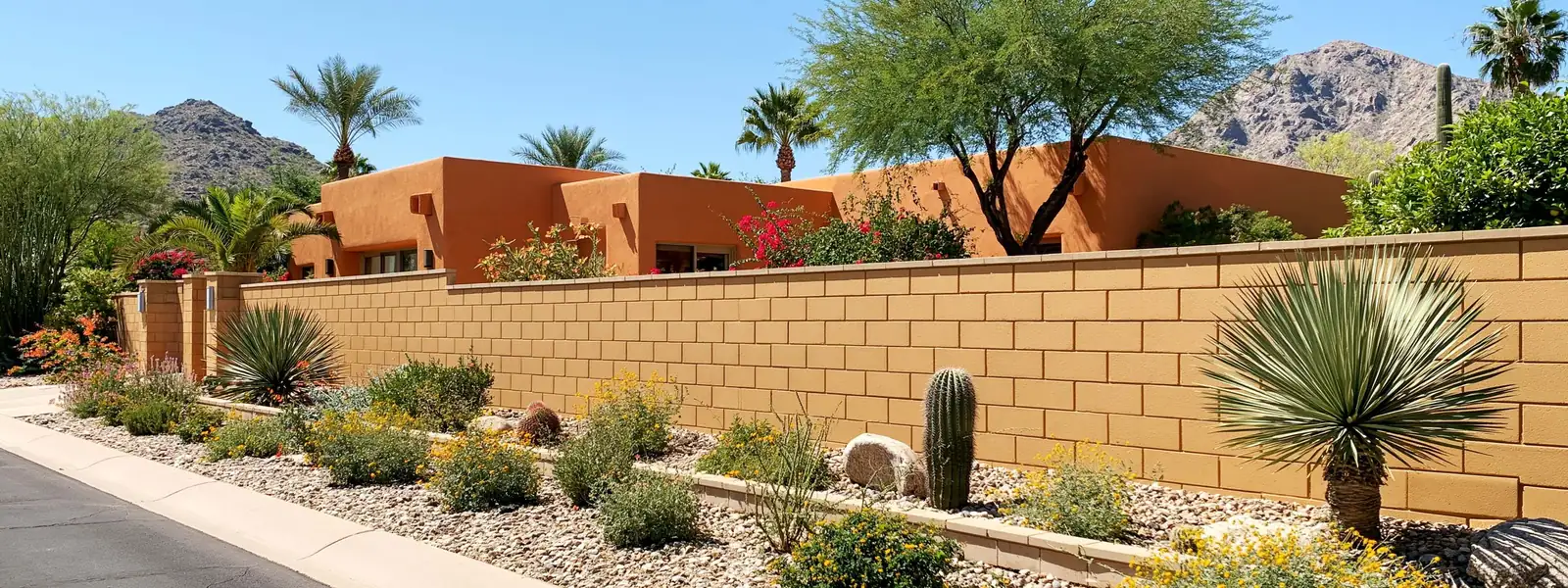
Long tan block wall in Tempe, AZ running straight and clean along a desert front yard after block wall repair

Block Wall Repair in Tempe, Start to Finish

Tempe Fence Company gets called out to cracked block more than any other single job. It is the most common wall problem in the East Valley, and the good news is that it is almost always fixable.

Block wall repair in Tempe comes down to one question, and it is worth asking before anyone quotes a number: is the wall itself the problem, or is it the ground underneath it? A crack in block is usually the wall telling you that something moved below. Deal with what moved and the repair holds for decades. Rebuild only the part you can see and the same crack tends to come back within a season or two.

Someone comes out, looks at the actual wall, tells you plainly which of the two you have, and gives you a price in writing before anything is booked. The visit is free, and there is no obligation at the end of it.

Why Block Walls in Tempe Start to Move

Most of the block in Tempe went up with the houses. The neighborhoods filled in through the 1960s and 70s, and the walls were built at the same time by the same crews, to the standard of the day. Fifty years on, a good number of them are reaching the point where they want some attention. That is not neglect and it does not mean the wall was built badly. It is the age the whole city's block is hitting at roughly the same time.

The other half of the story is underneath. Soil across the Valley takes on water in monsoon season and gives it back through the dry months, and it changes size as it does. A wall sitting on that soil moves with it, a small amount at a time, year after year. Block does not bend, so when the ground below shifts far enough, the wall opens a crack somewhere instead.

The ground moves before the wall does

This is the part that decides whether a repair lasts. Two walls can show the same crack from the street and need completely different work, because one has solid ground under it and the other does not.

Where the ground is still sound, the wall has simply worked itself apart at its weakest point, and the fix is straightforward. Where the ground has moved, the crack is a symptom and the foundation is the actual job. Restacking block over a footing that has shifted puts the wall back exactly where it was before it cracked, which is to say back on its way to cracking again.

What is happening below gets checked before either one is quoted, and you get told which you have in plain terms.

What you see from the driveway

Most people do not go looking for this. They notice it. A line running up through the block that was not there last year. A section that looks a little off compared with the neighbor's. A cap that has lifted at one end. A gap opening where two runs meet at a corner.

Any of those is worth a look. None of them means the wall is coming down tomorrow, and catching it while it is still one section is the difference between a repair and a rebuild.

Signs Your Block Wall Wants a Look

A crack running up through the block, especially one that steps along the mortar lines
A section that has started to lean away from the rest of the wall line
A cap that has lifted, cracked or come loose at one end
Chalky white bloom spreading across the face of the block
A gap opening at a corner, or where two runs meet
Ground on one side of the wall sitting noticeably higher than the other

Repair It, or Replace It?

Repair is almost always the cheaper answer, so that is where we start. On most Tempe walls it is also the right answer. A wall with sound ground under it can be opened up, put back and finished so that the repair is genuinely hard to find.

The decision is not really about how bad the crack looks. A dramatic crack in a wall sitting on solid ground is a smaller job than a hairline crack in a wall whose footing has moved. What matters is what is happening below, and that is what gets checked first.

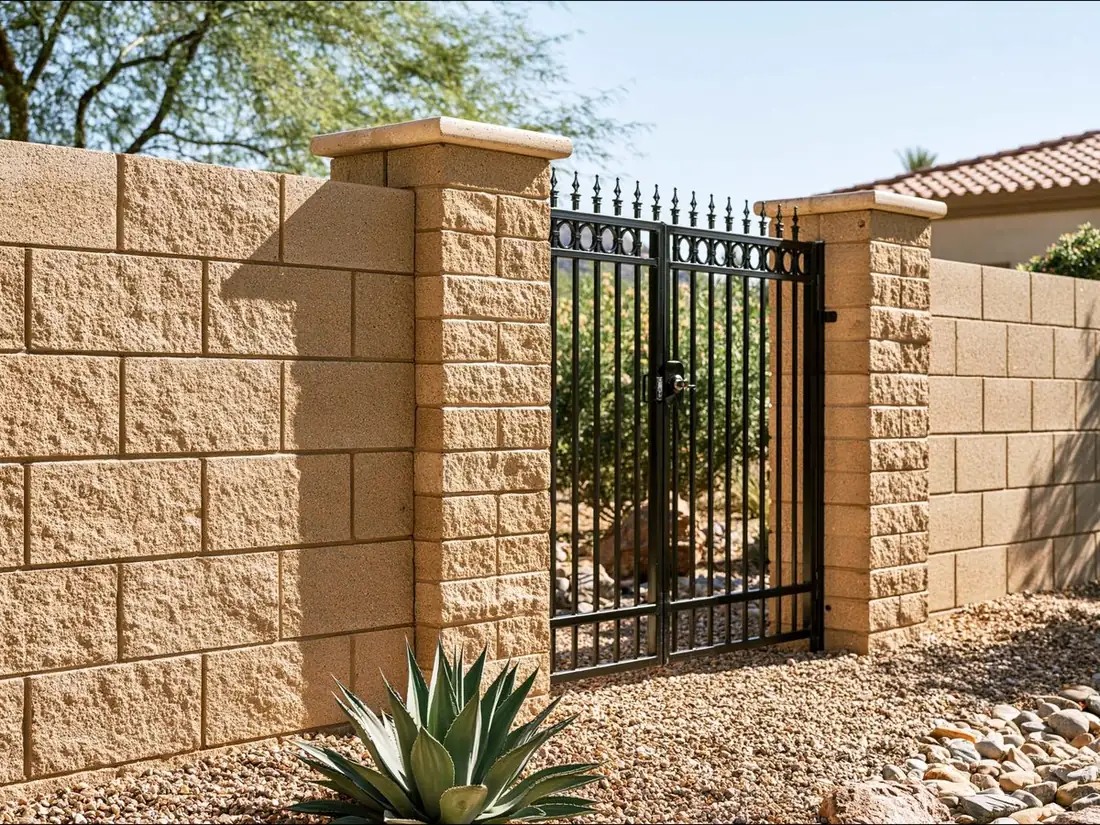
Repaired tan block wall and pilaster in Tempe, AZ with a black iron gate hanging square and a crisp cap line

When a wall can be fixed where it stands

If the ground is holding, the work stays where the wall already is:

  • The damaged block comes out and goes back in, tied properly into what is already standing rather than patched against it.
  • The mortar gets matched as closely as current materials allow, so the joints read continuous along the run.
  • A lifted or cracked cap is reset or replaced along that stretch, which is usually what makes the top line look straight again.
  • Whatever let the moisture in gets dealt with, so the face stays clean instead of blooming again next summer.

Chalky white on the face is worth mentioning here, because people often assume it means the wall is finished. It usually does not. It is a sign that moisture is finding a way through the block, and once the moisture has somewhere else to go, the face stays clean.

Most of what we get called for lands in this category.

When a section comes down and goes back up

Sometimes it does not. If the ground under a run has moved far enough, the honest answer is that the section needs to come down and be rebuilt on a foundation sized for what is actually under it. That costs more on the day and it is still the cheaper decision, because a repair that fails twice costs more than doing it properly once.

You will be told which of the two you are looking at before you decide anything, and you will be told why. If a wall is past the point where repair makes sense, we say so rather than selling a fix we do not believe in. When a full run is the right call, new block wall construction covers how those get built.

What Moves the Price on a Block Wall Repair

No two block walls price the same, and anyone quoting one over the phone without seeing it is guessing. These are the things that actually move the number, and they are what gets looked at on the visit.

The estimate you get back is a firm price in writing covering exactly what the work includes, so you can hold it up against anyone else's on equal terms.

What the visit looks at

  1. How much of the wall is involved, one section or a long run
  2. Whether the ground underneath is sound or needs work first
  3. How tall the wall is, and whether it is holding back any soil
  4. Whether a truck and materials can get near the work
  5. How closely the existing block can still be matched
  6. Whether a gate, a pillar or a corner sits in the damaged section

What a Block Wall Repair Involves

Matching the block so the repair does not stand out

This is the part people care about most and ask about least. A repair that holds but announces itself every time you pull into the driveway is only half a job.

Block made fifty years ago is not sitting on a shelf anywhere, so matching is a question of getting as close as current materials allow on color, size and face texture, and then being honest with you about where a seam will still show. On a wall that has weathered evenly for decades, new block reads slightly cleaner for a while and then settles in. Where an exact match is not possible, you hear that before the work starts rather than after.

Where a wall is painted or coated, matching is easier, because the finish carries straight across the repair.

Shared walls, communities and property lines

A good share of the block in Tempe sits on a property line, which means the wall is doing a job for two households at once. There is no single rule that settles who handles a repair. It usually comes down to where the wall actually sits and to whatever the two neighbors have already agreed between them.

What you get is a written estimate that spells out the damage and the work, which is a far easier thing to take next door than a conversation about who noticed it first. A shared wall gets quoted either way, whether one household is handling it or the cost is being split.

If the property sits in a community with a set standard for walls, the repair gets matched to the approved look so it passes review. Bring the requirements to the estimate and they get worked into the price rather than discovered halfway through.

Block Wall Repair Questions, Answered Plainly

Can a cracked block wall be repaired, or does the whole thing have to come down?

In most cases it can be repaired, and on a typical Tempe wall that is both the cheaper and the better answer. The deciding factor is the ground underneath rather than the size of the crack. Where the ground is sound, the damaged block comes out and goes back in, tied into what is already standing and matched as closely as current materials allow. Where the ground has moved, that section needs rebuilding on a proper foundation, because block put back over a footing that has shifted ends up in the same condition again. You get told which one you have, and why, before you decide anything.

Why do so many block walls in Tempe crack?

Two reasons stacked on top of each other. The first is age. Most of Tempe's block went up alongside the houses in the 1960s and 70s, so a large share of the city's walls are reaching the same point at the same time. The second is the ground. Soil across the Valley swells as it takes on water and shrinks as it dries, and it does that every year. A wall sitting on soil that keeps changing size moves with it. Block will not flex, so when the movement adds up, the wall opens somewhere instead. Neither reason means anything was done wrong.

Will the repair match the rest of my wall?

That is the goal, and on most walls the result is close enough that you have to look for the seam. Block from the 1960s is no longer made, so matching means getting as near as current materials allow on color, size and face texture. New block usually reads slightly cleaner than fifty-year-old block for a while, then weathers in. If your wall is painted or coated, the finish carries straight across the repair and the match is effectively complete. Wherever an exact match is not possible, you hear about it before the work starts.

My block wall is shared with a neighbor. Who deals with the repair?

There is no single answer, and it generally depends on where the wall actually sits and on any arrangement the two households already have. What you get is a written estimate covering the damage and the work, which makes the conversation next door a much simpler one. A shared wall gets looked at and quoted either way, whether one household is handling it or the cost is being split between two.

What is the chalky white on my block, and does it mean the wall is finished?

Almost always no. That powdery white is what gets left behind when moisture works its way through the block and dries on the face. It tells you where water is traveling, which is useful information, and it is not in itself a structural problem. Once the moisture has somewhere better to go, the face stays clean. It is worth pointing out at the estimate, because it often shows the reason a wall started moving in the first place.

How long does a block wall repair take?

Most single-section repairs are done in a day. A longer run, or a section that needs its foundation dealt with, takes longer, mainly because new work has to be given time to set before anything else happens on top of it. That can turn a job into two visits. Whatever the answer is for your wall, it goes in the written estimate alongside the price, so the timeline is not something you find out about on the day.

See all fence and block wall questions →

Related Work in Tempe

Block Wall Construction

New walls for property lines, courtyards and privacy, built on a foundation sized for our soil.

See Block Wall Construction →

Fence Repair

Leaning posts, broken boards and storm damage, put right so the fence line looks straight again.

See Fence Repair →

Gate Repair

Gates that drag, stick or will not latch, re-hung so they swing clean and close on the first try.

See Gate Repair →

Block Walls in Mesa

West Mesa went up in the same years as Tempe, so the block is the same generation and reaching the same point.

Fencing in Mesa →

Block Walls in Chandler

Long master-planned perimeter walls, shared runs between neighbors, and work that has to match the community standard.

Fencing in Chandler →

Not sure what you need?

Tell us what you are looking at and we will tell you what it needs. The visit is free either way.

Get in touch →
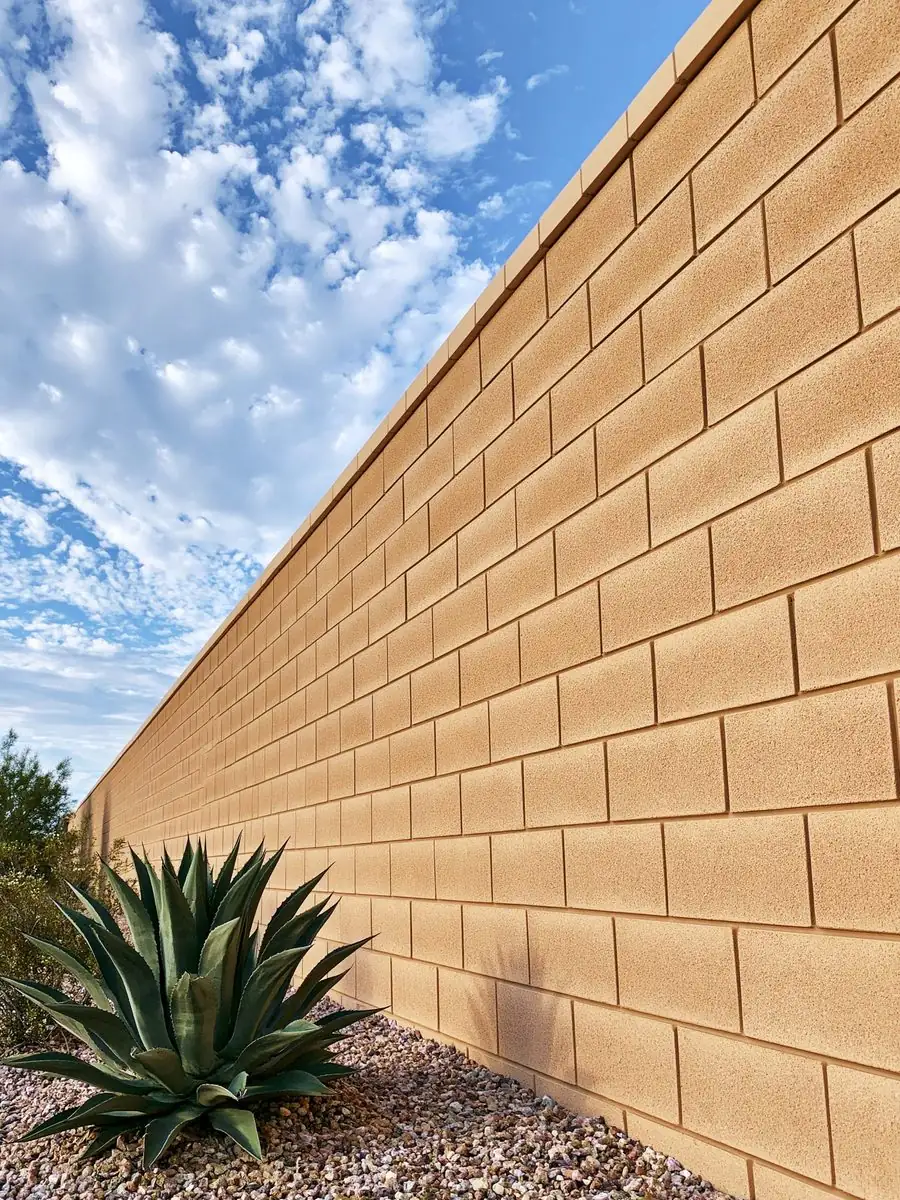
Repaired tan block wall in Tempe, AZ running clean and straight up the property line with a mature agave at the base

Get Your Free Estimate

Tell us what the wall is doing. Photos help, though they are not necessary. Someone comes out, looks at it, and gives you a firm price in writing. No cost, and no obligation to book the work. Call (480) 470-8551 or fill out the form.

Cracked is not the same as finished.

Call (480) 470-8551