
Wood Fence Installation in Tempe, AZ

Privacy, shadowbox and horizontal runs, built for full sun and set on posts sized for the fence above them. The warmest-looking fence you can put on a line, and the one that asks the most of you afterward. Free estimates, with a firm price in writing.

Call (480) 470-8551 Get Your Free Estimate
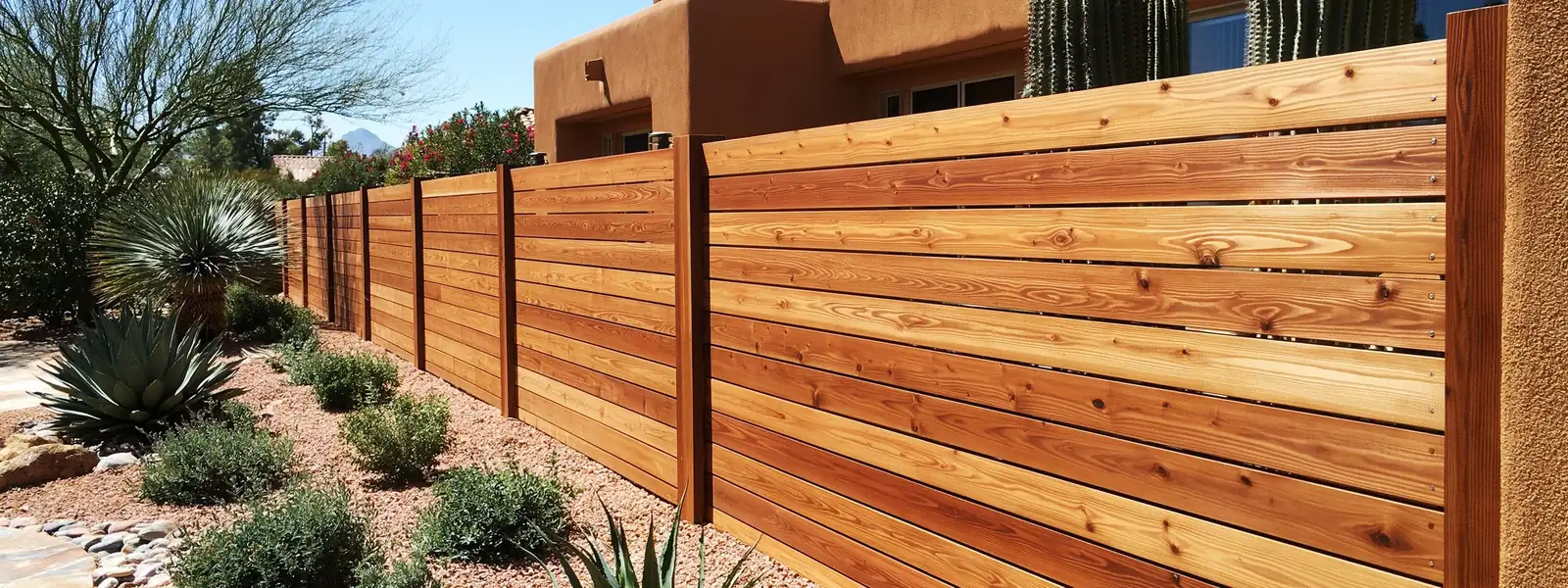
Wood fence installation in Tempe, AZ, a horizontal cedar fence running the length of an adobe home with the grain warm and the top line straight

In Tempe It Is the Sun That Ends a Wood Fence, Not the Rain

Wood is the fence most people picture when they picture a fence. It closes a yard off completely, it looks warm against gravel and desert planting, and you can stain it a different color later. It also asks more of you than any other material here, and saying so plainly beats talking around it.

Tempe Fence Company builds new wood fences across Tempe and the East Valley: back yard privacy runs, courtyard sections and shared property lines. Wood fence installation in Tempe turns on two decisions made before anyone picks up a board. Which way the run faces the sun, and what the posts are set into. Someone comes out, looks at the yard and gives you a price in writing before anything is booked.

Nothing out here fails the way it does in a wet climate. The sun works on the boards from above, water collects around the posts below, and how long the fence lasts depends on how well both were planned for. The visit is free, and there is no obligation.
What the Sun Does to a Wood Fence Here

A fence in a wet climate spends its life damp and gives out slowly from the inside. A fence in Tempe bakes. The color goes first, from whatever you chose toward a flat silver gray, and then the surface opens into fine splits along the grain.

That is cosmetic at first and structural later. As boards dry they shrink, and as they shrink they lose their grip on the nails and screws holding them to the rails. That is why a fence starts rattling in the wind a year or two before anything visibly breaks.

Which way the run faces changes the answer

Here is the part almost nobody is told before they buy. The same fence, built the same day out of the same wood, ages at different speeds along its own length.

The west and south sides of your yard take the afternoon of every summer. Those runs fade first, split first and ask for a fresh coat first. A north-facing run behind the house, or a stretch shaded by a tree, can look years younger than the run on the other side of the same property.

It is worth knowing before you choose. If one line of your yard takes the punishment, that is the line to think hardest about, whether that means spending the attention there at refinishing time or putting something else on that stretch.

What a finish actually buys you

Sealing or staining is the biggest thing you control. A finish stands between the sun and the surface of the board, and renewing it is what keeps the wood underneath sound rather than merely covered.

The timing is by look, not by calendar. You want the next coat on while the color is still there, not after the boards have gone silver and the grain has opened. Recoating a sound surface is a straightforward job. Bringing back one that has already opened up is much longer, and it never quite gets back to where it was.

Leaving it bare is a real choice, and plenty of people like the weathered silver look. Just know that it costs some life on the boards and not only their color.

Reasons Tempe Homeowners Put In Wood

You want the yard closed off completely, with nothing to see through
The fence there now has been patched enough times that a new run costs less
You want real wood and a color you choose rather than a factory finish
A dog means the yard has to be properly enclosed rather than mostly enclosed
The run is long, and block costs more than you want to spend on that line
You want the yard private soon, and wood goes up faster than a wall

Privacy, Shadowbox or Horizontal, and How Each One Reads

Most people arrive at this decision picturing boards standing upright side by side. That is one of three common ways to build a wood fence, and from the sidewalk the three look almost nothing alike.

It is worth ten minutes. You will look at one side of it every day, and the neighbor will look at the other.

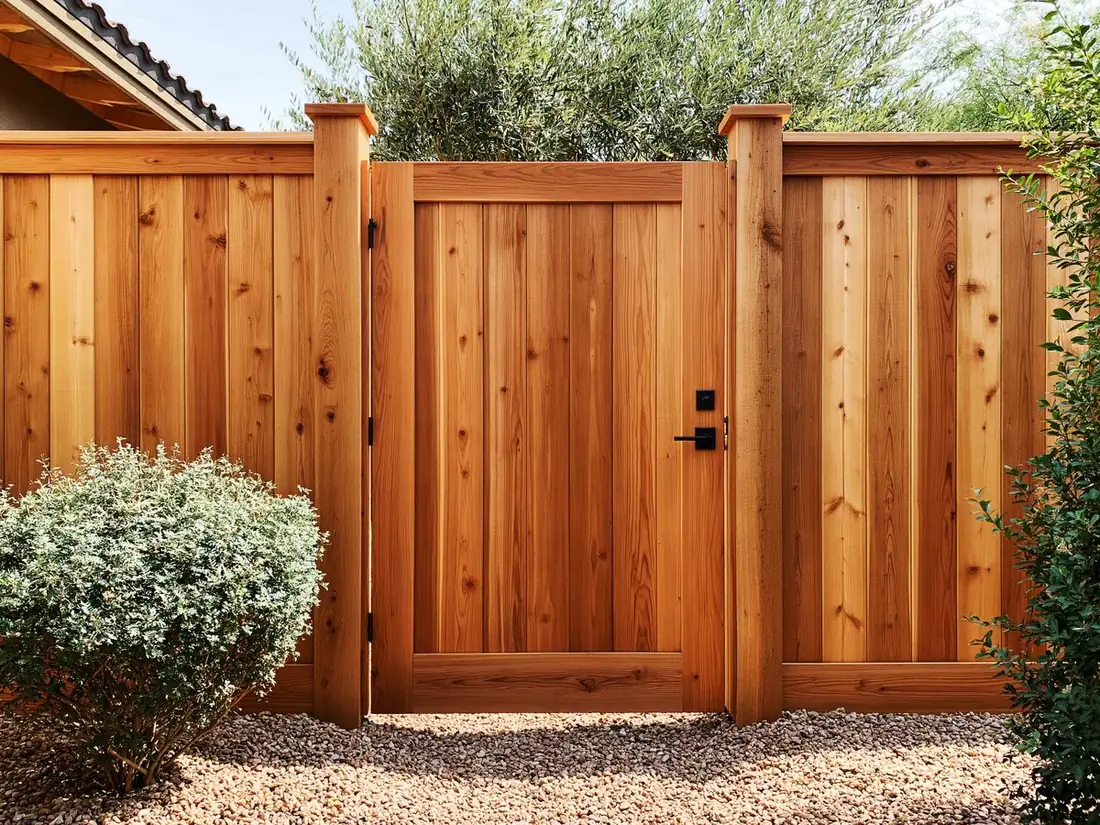
Cedar gate hanging square in a new wood privacy fence in Tempe, AZ, boards flush and matched with clean black hardware

The three ways the same fence gets built

A standard privacy fence is boards set edge to edge on one face of the rails. It gives you a solid screen, it is the most straightforward of the three to build, and the side with the rails looks different from the side without.

A shadowbox alternates the boards, some on the front of the rails and some on the back. It reads the same from both sides, which settles a lot of conversations on a shared line, and because it is not solid it lets air through. That matters more than it sounds when the summer wind arrives.

Horizontal boards run the long way instead of standing upright. It is the most current-looking of the three, it makes a yard read wider, and it is the fussiest to build. It wants straighter wood and the posts closer together, so it costs more than the same run built upright.

Height, the line and which face goes out

How tall you can build is set by what the city and your community allow rather than by what will stand up, and the two are not always the same number. Past a certain height a fence needs permitting, and corner lots carry extra rules about building near the street so drivers can see. Where your project lands gets confirmed before it is quoted, not after.

The face that goes out is worth deciding on purpose. The usual courtesy is that the finished side faces the neighbor and the street, and a shadowbox sidesteps the question by looking the same both ways. If the fence sits on a shared line, a word with the neighbor before work is booked prevents most of the friction these jobs create. If your community has a standard for style, height and color, bring it to the estimate so it gets priced in.

What Moves the Price on a New Wood Fence

Nobody can price a wood fence over the phone without seeing the line it goes on, because the posts are the part that costs and the ground decides the posts. These are the things that move the number.

The estimate you get back is a firm price in writing covering exactly what the work includes, so you can hold it up against anyone else's on equal terms. If the height needs a permit, or a truck cannot reach the line, you hear about it at the visit.

What the visit looks at

  1. How long the run is, and how many corners it turns
  2. How tall it is, which decides the posts as much as the boards
  3. Which style you pick, since shadowbox and horizontal use more wood
  4. What the posts are going into, because hard ground slows every hole
  5. Whether an old fence and its footings have to come out first
  6. How many gates there are, how wide, and what hardware hangs on them

How a Wood Fence Goes In, and What Keeps It Standing

The posts are the fence

The boards are what you look at. The posts are what you are actually buying. A fence that goes over in a summer storm has almost always had one post already gone at the ground line. Wind picks the weak post, not the weak panel.

Before a single board goes up, a few things get decided:

  • How deep the posts go, which follows from the height of the fence above them rather than from one standard hole.
  • What sits underneath each post, so water has somewhere to go instead of standing in the hole against the wood.
  • How the concrete is finished at the top, shaped so water runs away from the post rather than collecting against it.
  • How far apart the posts sit, which is a wind question and a style question at once.

Get those right and the fence is still straight in ten years. Get them wrong and it looks just as good on day one, which is exactly the problem.

One more thing is yours rather than ours. Water arriving at the base of the same post week after week is why that post goes while the two on either side hold. A sprinkler throwing onto the fence line is worth pointing out at the estimate so it can be moved.

Living with wood, honestly

Wood asks more of you than the alternatives do, and it is the shortest lived of the common materials here. A board or two will move in the first couple of years as it settles into the heat, and it wants a finish renewed on a cycle. In exchange you get the warmest-looking fence on the street, full privacy, and something you can restyle with a can of stain.

If you want that look without the upkeep, vinyl fencing gives you a solid screen you rinse off and forget. If you want the longest-lived thing on that line and never want to think about it again, block wall construction is the honest answer, at a higher price on the day. Neither is better than wood, they are just different trades, and you should know which one you are making.

If part of what you have now is still sound, a whole new line may not be the right call. Fence repair covers what can be saved.

Wood Fence Questions, Answered Plainly

What actually wears out a wood fence in Tempe?

Sun above the ground and water below it. The sun pulls the color out of the boards, dries them and opens fine splits along the grain, and as the wood shrinks it loses its grip on the nails and screws. That part is slow and visible. Underneath, water that keeps arriving at one post works on the wood in a narrow band right where it meets the ground, and that part is quick and invisible until the post lets go. Rot the way a wet climate means it is rarely the story here.

How long does a wood fence last compared with vinyl or block?

Wood is the shortest lived of the common materials in this climate, and that is worth saying plainly. Block is the longest lived by a wide margin, and iron is not far behind. Vinyl sits in between, provided it was made for desert sun. What that hides is how much of wood's life is in your hands. Two identical fences, one with posts set properly and a finish kept up, the other with neither, are not in the same conversation. The material sets the ceiling. The posts and the finish decide how close you get to it.

Which side of the fence faces my neighbor?

The usual courtesy is that the finished face, the one without the rails showing, goes toward the neighbor and the street, and your side is the one with the framework. It is a convention rather than a rule, so on a shared line it is worth agreeing rather than assuming. A shadowbox settles it completely, because the boards alternate front and back and it reads the same both ways. It costs a little more in wood, and it is the style we suggest most often where two households look at the same run.

How much does wood fence installation cost?

There is no honest number without seeing the line, and a phone quote is a guess at the part that costs most. What moves it is the length of the run, the height, the style you pick, what the posts are going into, whether an old fence and its footings have to come out, and how many gates are involved. Access matters too, since a line a truck can reach is a different job from one where every post comes through a side gate. What you get after the visit is a firm price in writing.

How often does a wood fence need sealing or staining?

Go by how it looks rather than by the calendar, because a run in full afternoon sun uses up a finish far faster than a shaded one. The rule worth remembering is to recoat while the color is still there. Once the boards have gone silver and the grain has opened, you are no longer recoating a sound surface, you are bringing one back, and that is a bigger job for a slightly worse result. Keeping a finish on the wood is the most useful thing you can do for it.

How tall can a wood fence be, and will it need a permit?

Height is limited by what the city and your community allow rather than by what can be built, and past a certain height a fence needs permitting. Corner lots carry extra rules about what can go up near the street so drivers can see, and a community standard can be stricter than the city on height, style and color. None of that is left for you to work out. Where your project lands gets confirmed before the price is finalized, and a permit, if you need one, goes in the written estimate.

See all fence and block wall questions →

Related Work in Tempe

Vinyl Fence

The same full screen with almost none of the upkeep, if that is the trade you want.

See Vinyl Fencing →

Fence Repair

Where only part of a wood run has gone and the rest is worth keeping.

See Fence Repair →

Gate Repair

The only part of a wood fence that moves, so it is the first part to complain.

See Gate Repair →

Chain Link Fence

For the stretch of line that needs enclosing rather than screening.

See Chain Link Fencing →

Fencing in Gilbert

Newer wood fences reaching the age where posts start moving in irrigated soil.

Fencing in Gilbert →

Fencing in Ahwatukee

Where style, height and stain color have to match a community standard.

Fencing in Ahwatukee →
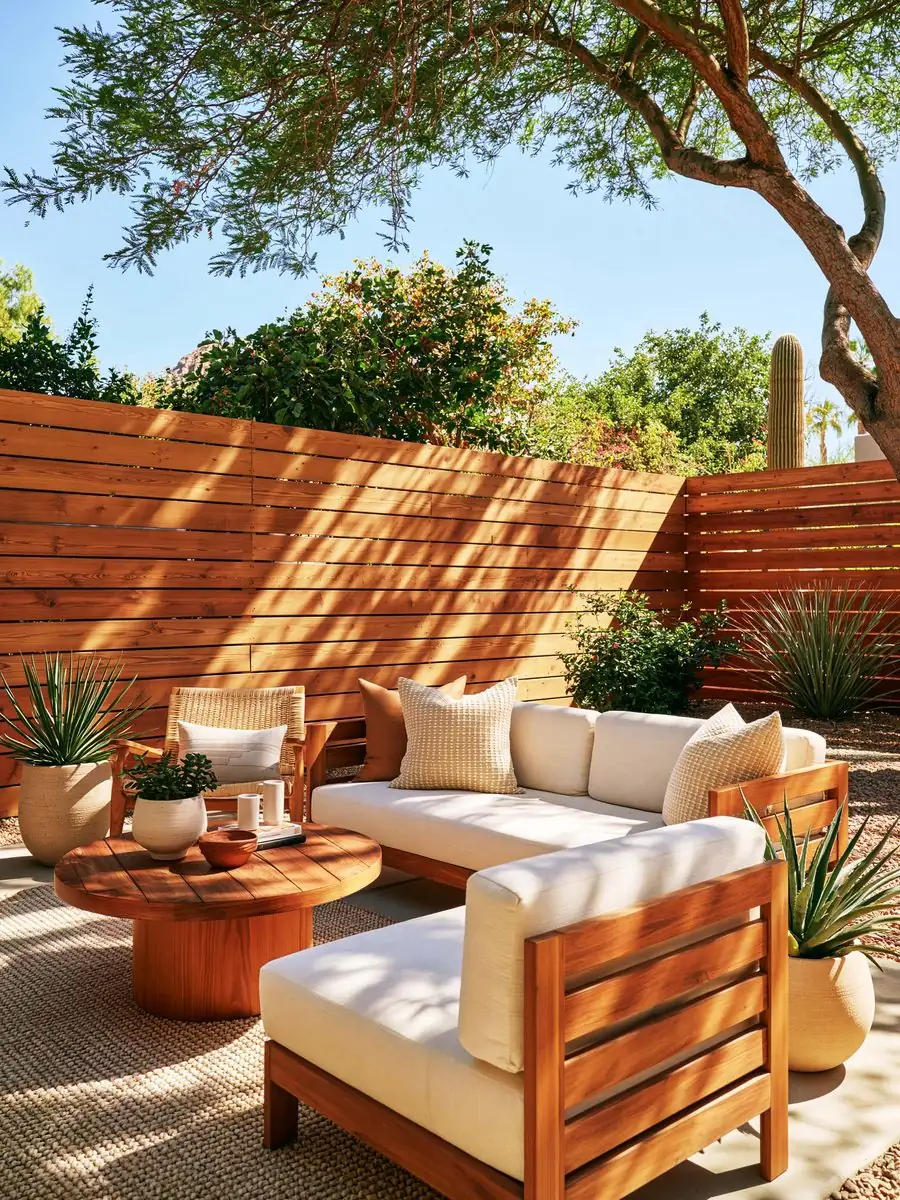
Shaded patio enclosed by a new horizontal cedar fence at a Tempe, AZ home, with a mesquite overhead and desert planting along the run

Get Your Free Estimate

Tell us how long the run is, how tall you want it and how many gates you need. Someone comes out, looks at the line and which way it faces, and gives you a firm price in writing. No cost, and no obligation. Call (480) 470-8551 or fill out the form.

A wood fence is only as good as its posts.

Call (480) 470-8551