Chain Link Fence in Tempe, AZ

The least expensive fence that lasts in this climate, and the only one you can put right one section at a time. Yards, dog runs, rental properties and commercial lots. Free estimates, with a firm price in writing.

Call (480) 470-8551 Get Your Free Estimate
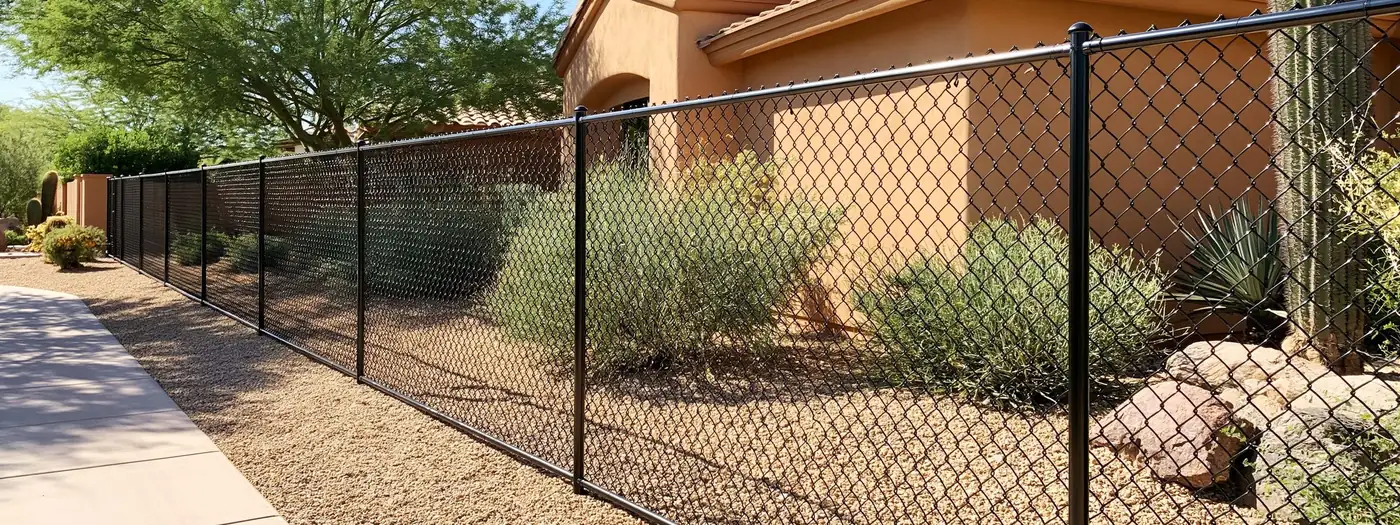
Chain link fencing in Tempe, AZ, a black vinyl coated chain link run along the side of a stucco home, the dark mesh receding against the desert planting behind it

The Fence That Does the Job and Stops There

Tempe Fence Company installs and repairs chain link across Tempe and the East Valley: back yards, dog runs, rental properties, storage yards, commercial lots and the temporary line around a construction site.

A chain link fence in Tempe does one job, and it does it for less money than anything else that lasts out here. It holds a boundary, it keeps a dog in, and it keeps people out of somewhere they have no business being. It does not try to be anything more than that, and there is nothing to apologize for in it. Plenty of properties need a boundary rather than a feature.

The part worth understanding before you compare two prices is that almost none of the cost is in the mesh. It is in the posts and in how they go into the ground. That is what decides whether you are still happy with this fence in fifteen years.

Why Chain Link Still Earns Its Place in Tempe

Every other fence on the street is doing two jobs at once. It marks a line, and it also has to look like something while it does it. Chain link only takes the first job, which is why it costs what it costs. On a back line, a side yard behind a gate, or a lot nobody drives past, the second job is not worth paying for.

It also suits the weather here better than people expect. Sun does nothing to it. There is no wood to bleach and split, no paint to renew, and nothing that goes brittle in July. Wind passes through the mesh instead of pushing on it, so the summer storms that flatten solid panels tend to leave a chain link run standing.

What it is genuinely good at

Where chain link wins, it wins clearly:

  • It goes up quickly, which matters when a property has to be secure by a date rather than eventually.
  • It repairs in pieces, so one damaged post or one torn stretch of mesh stays a small job instead of becoming a new fence.
  • It contains a dog without giving the dog anything to work on, no boards to push loose and nothing to chew through.
  • It lets you see what is on the other side, which is the point on a storage yard, an equipment lot, or anywhere a camera has to see as well.

None of that is a compromise you have to talk yourself into. On the right property it is the correct answer, and spending more would buy something you were never going to use.

What it will not do for you

It will not give you privacy. You can see out and anyone outside can see in, from the day it goes up. It does not do much for a street frontage either, and some communities do not allow it where it faces the road. If the fence is part of how the property presents itself, you will hear that at the estimate.

Slats close a good deal of that gap, and they come up again further down. What they do not do is turn chain link into a wood fence, and that is worth knowing before you decide.

Signs a Chain Link Fence Wants a Look

A post that gives when you push on it, or flakes rust at ground level
Mesh that bellies out between posts instead of running tight
A top rail that dips in the middle of a run, or has been bent by wind
A corner or end post leaning in toward the pull of the fence
A gate that drags on the ground or no longer meets its latch
Slats put in later, and posts that have started leaning since

Galvanized or Vinyl Coated, and How Heavy to Go

There is more than one kind of chain link, and the differences decide both the price and how much you notice the fence from the kitchen window.

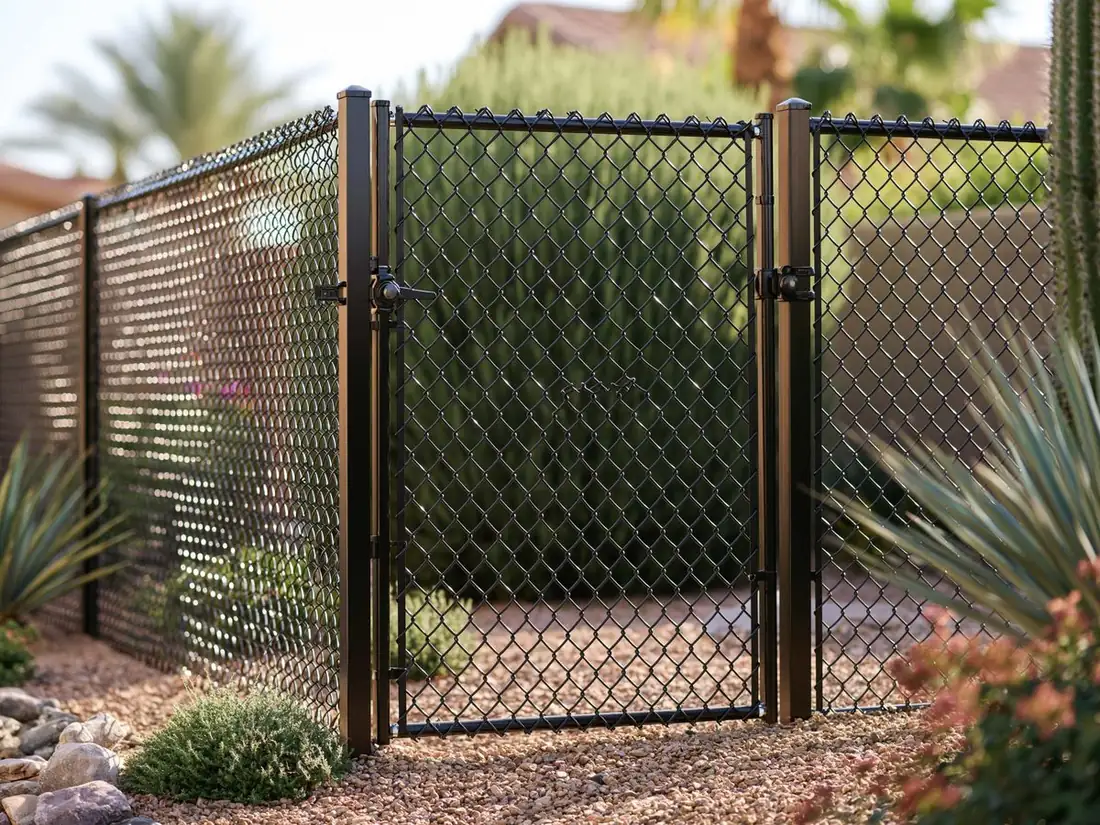
Black vinyl coated chain link gate in Tempe, AZ hanging square between two posts, the mesh taut and the latch clean and aligned

The two finishes, and where each one belongs

Galvanized is the silver fence everybody pictures. The steel carries a zinc coating that holds rust off, and it is the least expensive way to buy chain link. On a back line, a side yard or a working property, it is usually all anyone needs.

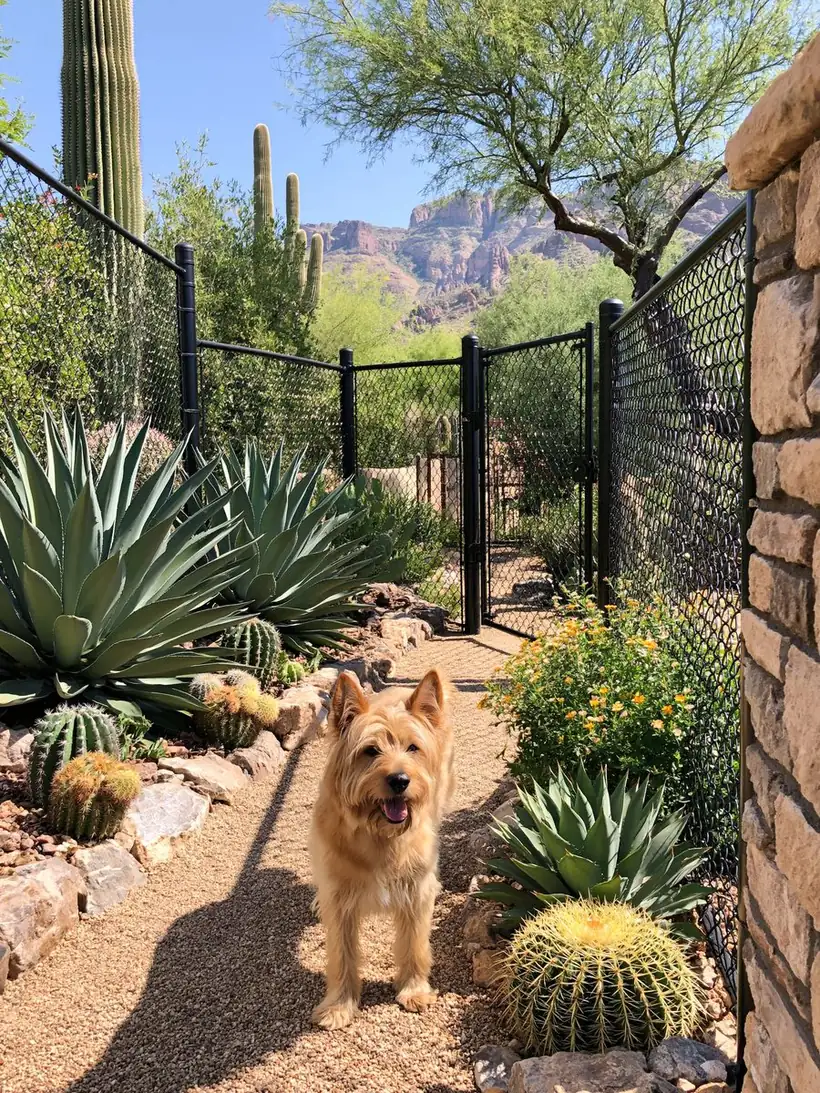
Vinyl coated is the same fence with a colored skin over the steel, most often black and sometimes green. It costs more per foot and it buys two things. The coating puts a second layer between the steel and the weather, and the darker color makes the fence recede. Black chain link in front of desert planting all but disappears from the patio door, while a silver run is the first thing your eye lands on. If the fence sits somewhere you look at every day, that is usually worth the difference.

Height, wire and what the fence has to hold

Height follows the job. A boundary that only needs to be clear can sit low. A dog run wants enough height that the dog stops thinking about it, and how much that is depends on the dog. A yard holding tools or equipment goes higher again, and past a certain height a permit comes into it. Where your property lands gets confirmed before anything is quoted, not after.

The other half of the answer is how heavy the fence is built: how thick the wire in the mesh is, and how thick the walls of the posts and rails are. This is where two quotes that look identical usually differ. A light fence and a heavy fence look much the same on the day they go in and behave nothing alike after five years of dogs, wind and people leaning on them. You get told which one you are being quoted.

Corners, ends and gate posts carry the real load. They hold the whole line tight, and the posts in between only hold the mesh up. Going light on those is what makes a run go slack a couple of summers later.

What Moves the Price on a Chain Link Fence

Chain link is the one fence people expect to price over the phone, and it still cannot be done honestly without seeing the ground the posts go into. These are the things that actually move the number.

The estimate you get back is a firm price in writing covering exactly what the work includes, so you can hold it up against anyone else's on equal terms.

What the visit looks at

  1. How many feet of fence, and how many corners, ends and turns the line makes
  2. How tall it needs to be, and how heavy the mesh and framework are built
  3. Galvanized or vinyl coated, and which color
  4. How many gates, how wide they are, and whether people or vehicles go through
  5. What the ground is like, and whether a machine can reach the line
  6. Whether an old fence comes out first, and whether slats are going in

Posts, Ground, and Putting an Old Fence Right

Why posts give up at ground level

The mesh on a chain link fence almost never fails first. The posts do, and they do it in one specific place: the line where the post meets the ground. Above that line the steel can look perfectly sound. Below it, the post has been standing in water.

That is a setting problem rather than a material problem, and the difference matters. A lot of the ground here has a hard layer under the topsoil that water cannot get through. A hole dug into it does not drain, so it holds whatever the irrigation and the monsoon put into it. The post spends years wet, then baked dry, then wet again, and it thins at the waterline while the rest of the fence still looks new.

The answer is in how the hole is made and filled, not in buying a more expensive post. Enough depth for the height of the fence. A bed of gravel underneath so water has somewhere to go. Concrete finished above ground level and shaped so water runs away from the post instead of down beside it. That is the difference between a fence still standing tight in twenty years and one that starts leaning in six.

Rentals, dog runs and fences you are turning around

A good share of the chain link work here is on rental property, and it is a different conversation from a homeowner's. What matters is that the fence is sound, that it passes a walkthrough, and that it happens between tenants rather than around them.

Chain link suits that because it comes apart in pieces. A torn stretch gets cut out and new mesh woven into what is already there. A bent rail comes off and a new length goes on. A leaning post gets reset without touching the runs on either side. There is no finish to match and nothing to wait on while it dries. If you look after several addresses, they can be walked in one visit and come back as a separate written price for each one.

Chain Link Questions, Answered Plainly

Is chain link really the cheapest fence, and does it stay cheap?

It is the least expensive fence that actually lasts out here, and the second half of that sentence is the part that matters. Cheap materials that give up in five years are not cheap. Chain link stays inexpensive across the years it stands there, because there is nothing to paint, nothing to seal and nothing that has to be replaced on a schedule. When something does go wrong it is usually one post or one stretch of mesh, which is a small repair rather than a new fence. Over twenty years on a long back line, very little else comes close on total cost.

What is the difference between galvanized and vinyl coated chain link?

Galvanized is the silver chain link everybody pictures. The steel carries a zinc coating that holds rust off, and it is the least expensive version. Vinyl coated is the same fence with a colored skin over the steel, usually black and sometimes green. It costs more per foot and it buys two things. The coating adds a second layer between the steel and the weather, and the darker color makes the fence far less noticeable. Black chain link in front of planting all but disappears from the patio door, while silver is the first thing your eye lands on.

Can you repair one section, or does the whole fence have to come out?

One section is normal, and it is the biggest practical advantage chain link has over everything else. A torn piece of mesh gets cut out and new mesh woven into what is already standing. A bent top rail comes off and a new length goes on. A post that has moved gets reset without disturbing the runs on either side. There is no finish to match, so the repair does not announce itself. Replacing a whole run only makes sense when several posts along it have gone at once, or when the fence is no longer right for the property.

Why do the posts fail at ground level when the mesh still looks new?

Because that is where the water sits. A lot of the ground here has a hard layer under the topsoil that water cannot pass through, so a post hole does not drain. It fills from irrigation and from monsoon rain, and then the heat pulls it dry again. A post goes through that cycle year after year and thins at the waterline while everything above it looks untouched. That is about how the post was set rather than about poor steel, and depth, a gravel bed and concrete crowned above ground level take most of it out.

Can I get privacy from a chain link fence?

Partly, and it is the first thing most people ask. Slats are strips that thread down through the mesh, and they close off a good deal of the view for far less than a solid fence costs. What they do not do is turn chain link into a privacy fence. You still get gaps, and there is a second effect worth knowing about. Once slats are in, wind stops passing through the fence and starts pushing on it, which means heavier posts and deeper footings. If real privacy is the point, a wood fence is the honest answer.

I own rental properties. Can this be done between tenants?

Yes, and it is one of the reasons chain link ends up on so many rentals here. There is no paint to dry and no finish to cure, so a fence can go in, or be put right, inside a turnaround instead of holding one up. Repairs are quicker still, because most of them come down to one post or one stretch of mesh. If you look after more than one address, they can be walked in a single visit and come back as a separate written price for each. Call (480) 470-8551 and say how many properties are involved.

See all fence and block wall questions →

Related Work in Tempe

Fence Repair

Leaning posts and storm damage on properties where the chain link is only part of the line.

See Fence Repair →

Gate Repair

The gate is the only part of a chain link run that moves, so it goes out of square first.

See Gate Repair →

Wood Fence

For anyone who has worked out that slats are not real privacy and wants a solid fence.

See Wood Fence →

Fencing in Mesa

The same rental-heavy older housing across the border, and the same turnaround problem.

Fencing in Mesa →

Repairs in Guadalupe

Tight lots and short runs, exactly where a section-at-a-time repair is a one-trip job.

Fence Repair in Guadalupe →

Contact

For anyone with several properties who would rather describe them than pick a service.

Get in Touch →
Dog standing on a gravel path beside a black vinyl coated chain link fence in Tempe, AZ, the dark mesh all but disappearing against the agave and desert planting

Get Your Free Estimate

Tell us what the fence has to do. A dog, a property line, a storage yard, or a rental that has to pass a walkthrough. Someone comes out, looks at the ground and at what is already there, and gives you a firm price in writing. No cost, and no obligation. Call (480) 470-8551 or fill out the form.

Cheapest to put up. Cheapest to put right.

Call (480) 470-8551