Fence Repair in Tempe, AZ

Wood, vinyl, iron and chain link. A post gone soft at the ground, a section the wind pushed over, a gate that no longer reaches the latch. Most of it is a repair rather than a new fence. Free estimates, with a firm price in writing.

Call (480) 470-8551 Get Your Free Estimate
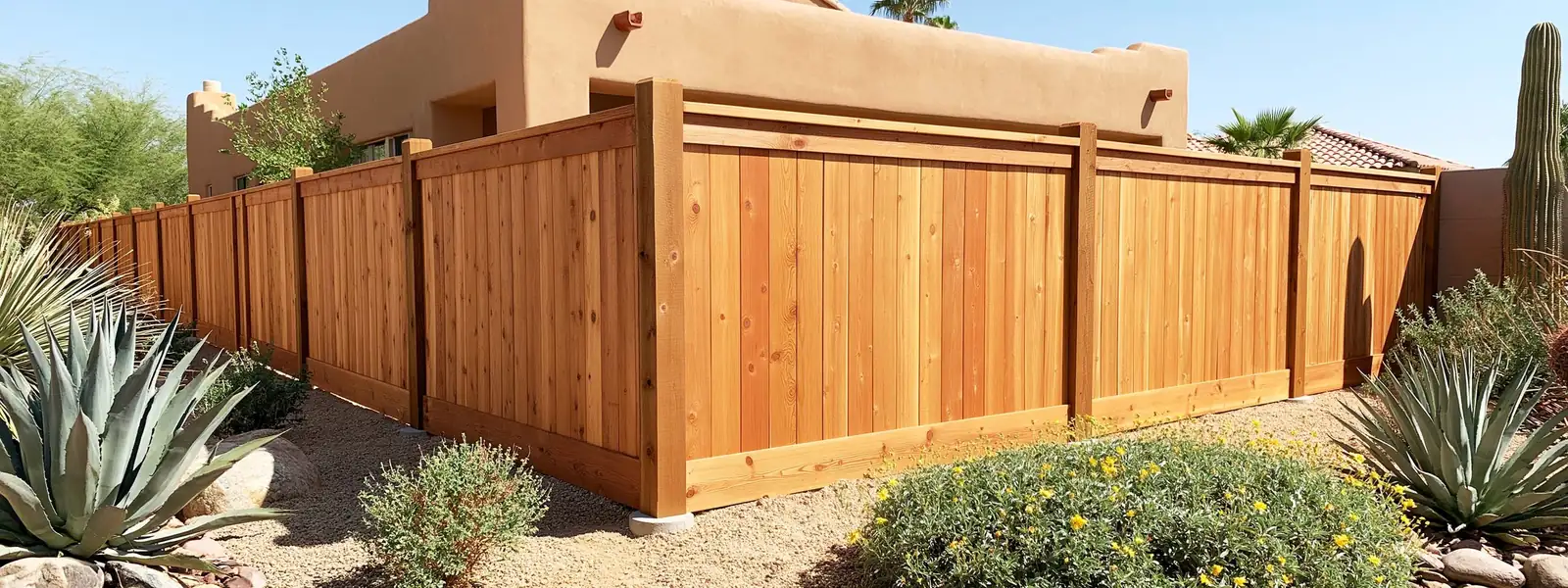
Fence repair in Tempe, AZ, a cedar privacy fence running true along the back of an adobe home with every board even and the top line straight

Fixing the Part That Failed, Not the Whole Fence

A fence almost never gives out all at once. It gives out at one post, one rail or one gate, and everything on either side starts to look bad because of it. That is why repair is usually the cheaper answer here, and usually the better one.

Tempe Fence Company works on wood, vinyl, wrought iron and chain link across Tempe and the East Valley. Fence repair in Tempe comes down to finding the part that actually gave way, instead of pricing a new fence because one side of the yard looks tired. Someone comes out, walks the whole run, and gives you a price in writing before anything is booked.

What ages a fence here is not what ages one somewhere with weather. Sun does the damage above the ground, wind does its damage in a few weeks each summer, and the ground line is where the two meet. The visit is free, and there is no obligation.

Why Fences in Tempe Wear Out Where They Do

A fence in the Valley leads a different life from a fence in a wet climate. It does not sit damp for months and it does not quietly rot away. It bakes. Then for a few weeks each summer it gets hit by wind that arrives all at once and is gone in twenty minutes.

So the wear turns up in two places. At the top, where years of sun have worked on the boards and the finish, and at the bottom, in a narrow band where the post meets the ground. The middle of a fence is rarely the problem.

The sun does the work that rain does elsewhere

Wood does not need moisture to age here. Sun grays it, dries it and opens splits along the grain, and as the boards shrink, the nails and screws lose their grip. That is why a fence starts rattling in the wind a year or two before anything visibly breaks.

Vinyl depends on what grade it was to begin with. Panels made for this sun keep their color and hold their line. Cheaper panels go brittle, and once they are brittle a gust or a stray ball is enough to crack one.

Iron has the easiest life of the four until its coating wears thin, and then it starts marking at the bottom of the pickets, which is where the irrigation reaches it. The runs that go first are the ones facing west and south, taking the afternoon of every summer. A fence on the shaded side of the same house can look years younger.

Everything comes down to the ground line

Look at a failing wood fence and the wood a foot off the ground is often still sound. The damage sits in a band right where the post enters the ground. Steel and chain link posts do the same, showing a rust line at almost exactly that height.

The usual reason one post goes while the two on either side hold is water that keeps arriving. A sprinkler head throwing onto the base of a post, or a drip line that has worked its way over. Move the water and the replacement post lasts a good deal longer.

Wind then finds whatever is already loose. A fence that goes over in a monsoon storm has almost always had a weak post for a while. The storm gets the blame, and all it really did was pick the spot.

Signs Your Fence Wants a Look

A post that moves when you push the fence, taking the panel with it
A fence line that dips or bows between posts instead of running straight
Wood gone dark and soft where it meets the ground while the rest looks fine
A rust line around the bottom of iron pickets or chain link posts
Boards that have cupped, split or worked loose from the rails
A gate that drags on the ground or needs a lift to reach the latch

How Much of the Fence Actually Needs Replacing

Repair is almost always the cheaper answer on a fence, and on most Tempe properties it is also the right one. The parts that fail are a small share of what is standing, and they can usually be dealt with where they are.

The decision is not really about how rough the fence looks from the driveway. Sun-faded boards on sound posts are a cosmetic problem with a cheap fix. A tidy-looking fence on posts that have gone at the ground line is the more expensive of the two.

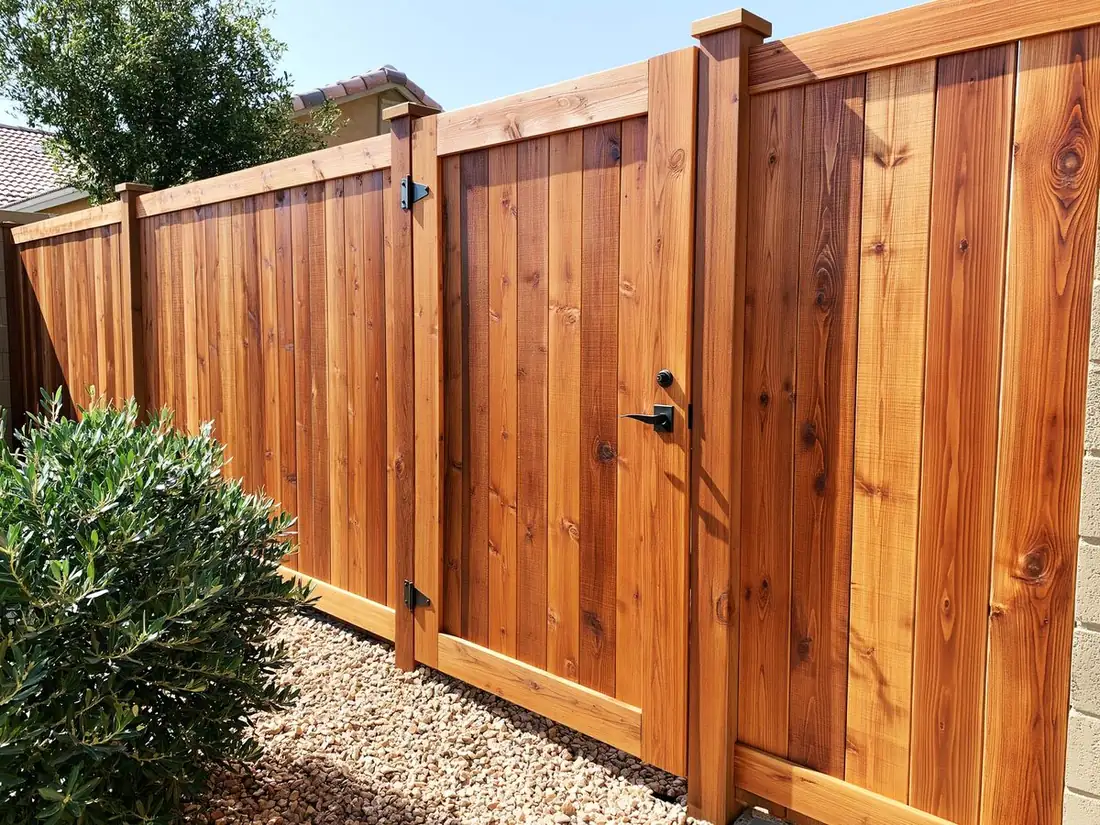
Cedar privacy fence and matching gate in Tempe, AZ hanging square on clean hardware, the boards flush and the grain warm

Count the posts, not the panels

Posts are what a fence costs. Boards, pickets, rails and panels are the inexpensive part and they are quick to change. So the useful question is how many posts are still doing their job.

Where most of them are, you can keep a fence going for years by replacing only what shows. Boards get swapped, a bowed rail comes off, a leaning post gets reset, and the run gets pulled back to a straight line. That is a morning of work rather than a new fence.

When a new run is the honest answer

Sometimes it is. When most of the posts along a side have gone at the ground line, when boards no longer hold a screw, or when a fence has been patched so often that it is a collection of repairs rather than a fence, replacing that run costs less across the next ten years than keeping the old one upright.

The other reason is that the fence is no longer right for the yard. What suited the property twenty years ago may be the wrong height or material now that there is a pool or a dog. If that is where you land, wood fence installation, vinyl fencing and chain link cover what goes back in and why.

If the leaning thing on your line turns out to be block rather than fence, that is a different job with a different cause, covered on block wall repair.

What Moves the Price on a Fence Repair

No two fence repairs price the same, and anyone quoting one over the phone is guessing at the part that costs the most. These are the things that move the number, and what gets looked at on the visit.

The estimate you get back is a firm price in writing covering exactly what the work includes, so you can hold it up against anyone else's on equal terms.

What the visit looks at

  1. How many posts have failed, which matters more than how many panels look bad
  2. How long the affected run is, one section or most of a side
  3. What the fence is made of, and how closely it can still be matched
  4. Whether old concrete has to come out before a new post goes in
  5. Whether a truck can get near the line, or everything comes through a side gate
  6. Whether gates, hardware or a pool enclosure are part of it

How a Fence Repair Actually Goes

What happens on the day

The whole run gets walked first, not just the part that looks worst. Wind and water both tend to leave more than one weak post behind, and finding the second one before the crew packs up is the difference between one visit and two.

Once you have agreed what is being done, the work itself is straightforward:

  • The failed posts come out and go back in properly, with the old concrete removed rather than a new post wedged in beside it.
  • Panels, boards and rails go back square, so the run holds a straight line instead of keeping whatever shape it had sagged into.
  • Worn hardware gets replaced rather than tightened, because a hinge or a latch that has been working itself loose for two years will do it again.
  • Everything that comes off leaves with the crew, so you are not left with a stack of broken boards.

A post going back in gets set deep enough for the height above it, with a base under it so water moves away instead of sitting in the hole, and the concrete shaped so water runs off rather than pooling against the post. That is the difference between a post that lasts and one that is back on the list in a few summers.

Making the repair look like it belongs

New wood is bright next to wood that has taken ten Tempe summers, and nothing changes that on the first day. It weathers in over a season or two, and if the fence is stained or painted, carrying the finish across the new boards closes the gap immediately.

Vinyl and iron are easier to settle in. Vinyl gets matched on color and profile as closely as what is currently made allows, and iron is prepared and coated so the repaired stretch is not the first thing you see.

Gates get treated as their own piece of work, because a gate is the only part that moves and it fails first. If the real complaint at your property is a gate that drags, sticks or will not stay shut, gate repair covers that in full. A gate on a pool enclosure has rules of its own about closing and latching, and that sits on pool fencing.

Fence Repair Questions, Answered Plainly

How much does a fence repair cost?

There is no honest number without seeing the fence, and anything quoted over the phone is a guess at the part that costs most. What moves the price is how many posts have failed, how long the affected run is, what the fence is made of, whether gates and hardware are involved, and whether a truck can reach the line or everything is carried through a side gate. What you get after the visit is a firm price in writing covering exactly what is included, so you can compare it against anyone else's on the same terms.

Is it cheaper to repair a fence or replace it?

On most fences, repair, and usually by a wide margin. Fences fail in one place at a time, and what fails is a small share of what is standing. Where the posts are sound, changing boards, rails and hardware keeps a fence going for years at a fraction of what a new run costs. Replacement becomes the cheaper decision once most of the posts along a side have gone at the ground line, because then you are building a new fence anyway, one post at a time. You get told which of the two you have before anything is booked.

My fence went over in a storm. Does the whole thing need replacing?

Usually not, and usually more posts are involved than the flattened part suggests. Wind does not pick at random. It finds the post that had already given way at the ground and levers the run over from there, so the next weak post is often a couple of panels along. The whole line gets checked, not just the section lying in the yard. Where the posts on either side are sound, the fence gets reset, re-hung and pulled back to straight. Where the storm finished off a run that was already going, replacing it is the cheaper answer.

Can you repair one section, and will it match the rest?

Single sections are most of this work, so yes. Matching is the honest caveat. New wood next to wood that has taken ten Tempe summers reads brighter for a while, then weathers in within a season or two. If the fence is stained or painted, carrying the finish across the new boards closes the gap right away. Vinyl gets matched on color and profile as closely as what is currently made allows, and iron is coated so the repaired stretch settles in with the rest. Where an exact match is not possible, you hear about it before the work starts.

What kinds of fence do you repair?

Wood, vinyl, wrought iron and chain link, and the gates in all of them. Each gives out in its own way. Wood dries, splits and lets go of its fasteners. Low-grade vinyl goes brittle in the sun and cracks. Iron marks and thins at the bottom of the pickets, where the irrigation reaches. Chain link loosens along the top rail and lets the fabric belly out. Gates fail first in every material, because they are the only part that moves. Block walls are a different job with a different cause, covered on block wall repair rather than here.

How long does a fence repair take, and how soon can someone look at it?

Most single-section repairs are a day's work. Where posts are being set, the fence has to be left alone before panels go back on it, which can turn one visit into two. Scheduling depends on the week, and the days after a monsoon storm are the busiest of the year, because every fence on the street calls at once. If you are a landlord working to a tenant change, say so when you call, because that changes how the job gets slotted in. Whatever the answer is for your fence, the timing goes in the estimate next to the price.

See all fence and block wall questions →

Related Work in Tempe

Gate Repair

The only part of a fence that moves, so it fails first. Dragging, sticking, latches that no longer meet.

See Gate Repair →

Block Wall Repair

Cracked or leaning block. A different cause and a different fix on the same line.

See Block Wall Repair →

Wood Fence

When the sun has taken a run past repairing, what goes back in and how the posts get set.

See Wood Fence →

Vinyl Fence

Panels that keep cracking are a grade question rather than a repair question.

See Vinyl Fence →

Chain Link Fence

Fabric, rails and posts, repaired in sections or run new along a line.

See Chain Link Fence →

Fence Repair in Guadalupe

Short runs and quick jobs next door, same repair-first answer.

Fence Repair in Guadalupe →
Homeowner leaning against a finished cedar gate at a Tempe, AZ home, the boards even and the gate standing true

Get Your Free Estimate

Tell us what the fence is doing. The post that moves, the section the wind took, the gate that will not latch. Someone comes out, walks the run and gives you a firm price in writing. No cost, and no obligation to book the work. Call (480) 470-8551 or fill out the form.

One post is not a whole fence.

Call (480) 470-8551