Pool Fence Installation in Tempe, AZ

A pool barrier has a job the rest of your fencing does not, and nearly all of it comes down to the gate. New enclosures built to Arizona's safety requirements, and existing ones brought back up to standard. Free estimates, with a firm price in writing.

Call (480) 470-8551 Get Your Free Estimate
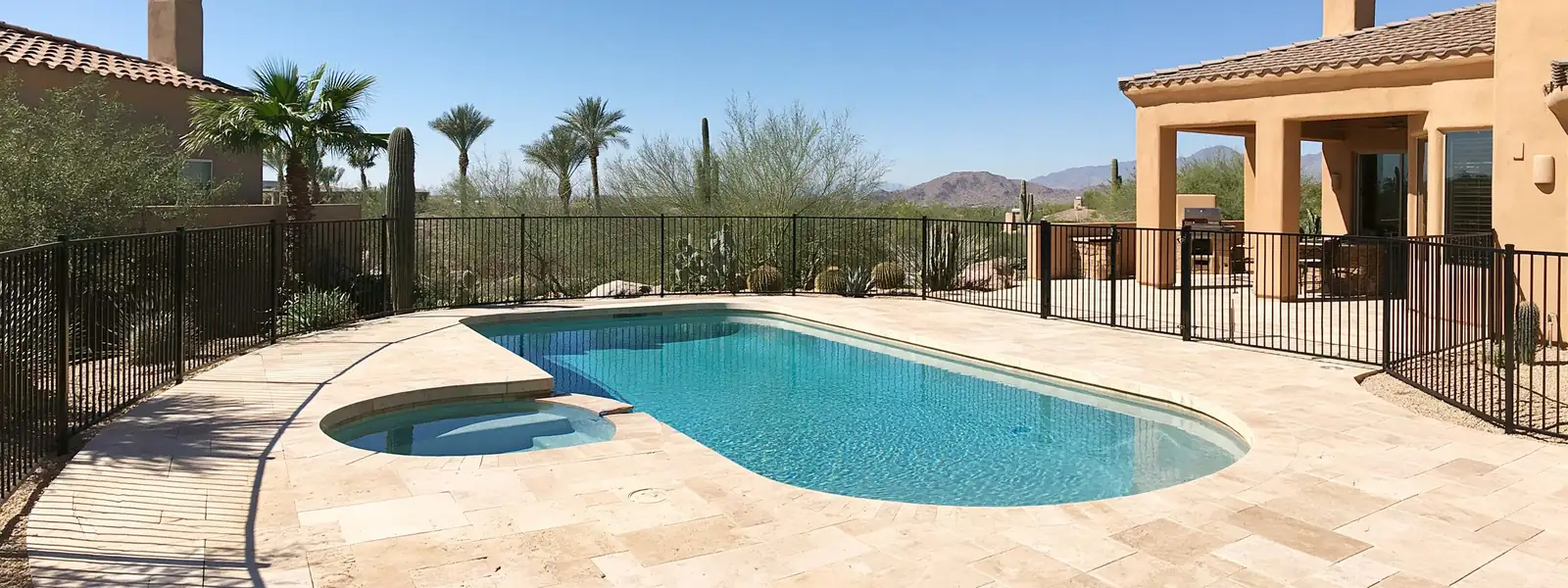
Pool fencing in Tempe, AZ, a black iron pool fence enclosing a travertine pool deck with the desert and mountains beyond

A Barrier Only Has to Work on the Day Nobody Is Watching

Every other fence on your property is there for privacy, for the dog, or because it looks right from the street. The one around the water is different. It has a job, and it has to do it on its own, at the moment when nobody is thinking about it.

Tempe Fence Company builds and repairs pool barriers across Tempe and the East Valley: new enclosures, existing fencing brought back up to standard, and the gate hardware most of this turns on. A pool fence in Tempe gets looked at more closely than any other fence you will own, because it is the one an inspector signs off on and the one that comes up when the house sells.

Most enclosures already standing are closer than their owners think. Someone comes out, walks the whole line with you and says which parts are doing their job, with a price in writing before anything is booked.

What a Pool Barrier Has to Do in Tempe

A pool barrier is not judged on how it looks or how solid it feels when you push it. It is judged on behavior. Does it keep a small child on the outside of it when there is no adult in the yard? Everything else follows from that question.

That is why an enclosure can look fine and still not be doing what it is there for. A gate that shuts nine times out of ten looks exactly like a gate that works. The tenth time is the reason the fence exists.

The gate is the part that matters

If you check one thing in your yard this week, check the gate. It is the moving part, it is the part that wears, and it is where nearly every barrier we see has quietly stopped working. A pool gate has to look after itself, with nobody helping it:

  • It closes on its own, from anywhere in its swing, with no hand on it and nothing holding it open.
  • It latches on its own, catching on the first try instead of coming to rest against the post.
  • The latch stays out of a small child's reach, and nothing beside the gate turns into a step up to it.
  • It opens away from the water, so a child pushing on it meets a shut gate rather than the pool.

Springs tire. Hinges get hot, take on dust and stiffen. A gate that caught cleanly two summers ago starts wanting a nudge, and the nudge becomes a habit before anybody calls it a fault. That drift is the most common fault we find, and the cheapest to put right.

The rest of the line still counts

The gate gets the attention, and the rest of the barrier still has to hold its end. It has to run without a gap a child can get through, and without anything that turns it into a climb.

What undoes a good barrier is rarely built into it. It arrives afterward. A planter, a trash can, a stack of pool furniture or a low wall added by a landscaper gives a boost over something that was fine when it went in. Trees do the same as they fill out.

None of that calls for a rebuild. It calls for somebody to walk the line with fresh eyes.

Signs Your Pool Enclosure Wants a Look

The gate needs a push, a lift or a second try before it catches
The gate comes to rest against the post instead of latching itself
Daylight shows around the gate or under the fence line with everything shut
A post shifts when you lean on the fence, so the footing has let go
Rust coming through at the bottom of the iron, where the sprinklers reach
Furniture, a planter or a bin sits against the barrier and gives a leg up

Choosing the Barrier: Mesh, Iron or Glass

There are three common ways to enclose a pool in a Tempe back yard, plus the block wall that may already run around it. They cost different amounts and last different lengths of time, and the real trade is how much of the yard you are willing to look at through a fence.

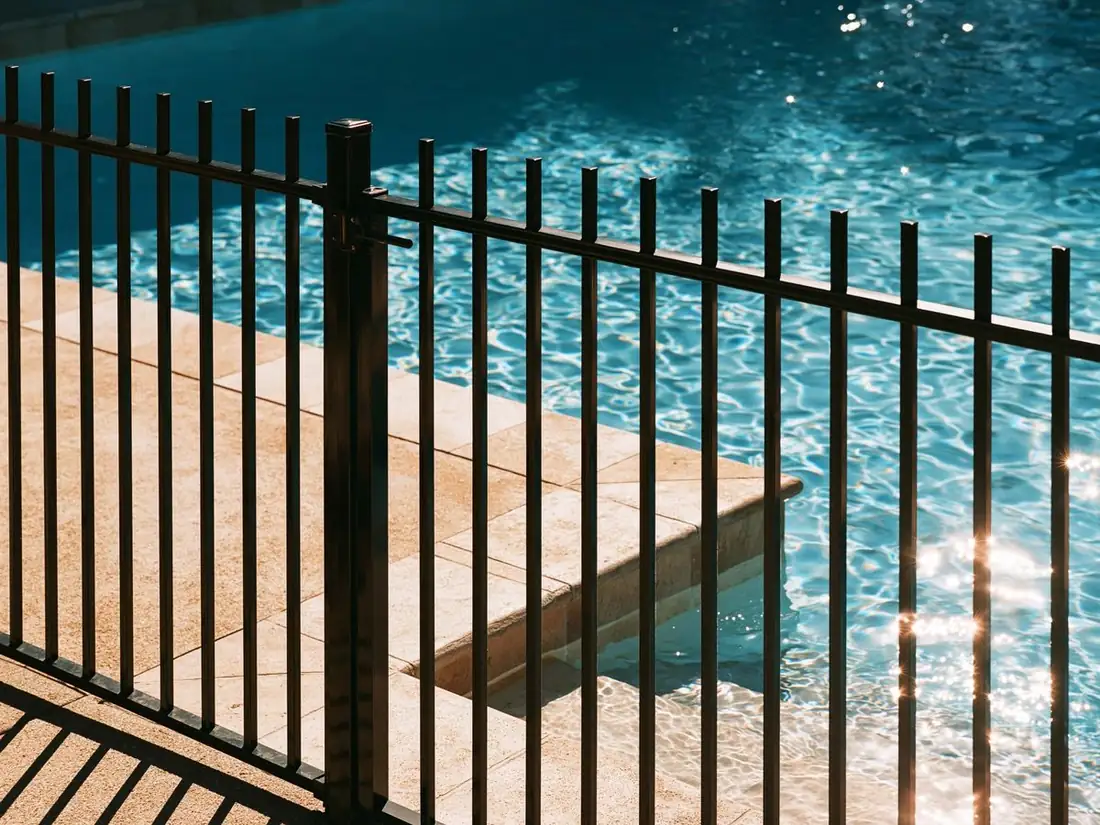
Close view of a black iron pool fence in Tempe, AZ, the pickets plumb and evenly spaced with sunlit pool water behind

What each one trades away

Removable mesh is the least expensive and the least permanent. It drops into sleeves set in the deck and comes out when you want the space back, which suits a yard where the pool is the only reason you are fencing. It also depends on the household more than the other two do, because a barrier that spends half the summer in the garage is not doing much.

Iron is the middle of the range and what most Tempe yards end up with. It is permanent, it takes our summers without complaint, and you can still see the water through it, which matters when the pool is the best thing in the yard. What iron asks for in return is attention low down, where the coating is thinnest and the irrigation lands. Rust starts at the bottom and works up, so iron that looks fine at eye level can be tired at the base. Wrought iron fencing goes further into that.

Glass costs the most by a clear margin, and people choose it because it more or less disappears. On a small yard, where a run of pickets would cut the space in half visually, that is worth real money. It is also the most demanding to keep looking right.

The wall you already have

Plenty of Tempe pools sit in yards already ringed with block, and a sound wall can carry part of the enclosure, which makes the job smaller and the price lower. The condition is that it is genuinely sound. A section that has started to lean, a crack stepping up through the mortar joints, or a cap that has lifted is a wall in motion, and walls in motion open gaps. That gets put right before it gets counted on. Block wall repair covers the diagnosis, and where a side of the yard needs closing off, new block wall construction covers how those runs go in.

Where block does the perimeter, the gate is the piece built into it, and building the opening properly is worth more than hanging good hardware on whatever is there.

What Moves the Price on a Pool Fence

Two pools the same size can price a long way apart, and most of that difference is settled before anyone talks about fencing. It comes down to how much of the enclosure already exists and how much has to be built from nothing.

The estimate you get back is a firm price in writing covering exactly what the work includes, so you can hold it up against anyone else's on equal terms.

What the visit looks at

  1. How much of the enclosure already exists and can be kept
  2. How far the new run has to go, and how many corners it turns
  3. Which material you choose: mesh, iron, glass or block
  4. How many gates there are, and what hardware each one needs
  5. What the barrier goes into: decking, soil, or ground that fights a post hole
  6. What the city and your community ask for, and whether the work needs inspecting

Existing Enclosures, Rentals and Who Signs Off

Bringing one back up to standard

Most of the pool work we get called for is not a new fence at all. It is a fence already standing that has drifted. The gate has stopped closing by itself. The latch was moved down at some point so an adult did not have to reach for it. A spring came off because it was slamming. A panel was cut to get equipment through and never properly put back.

That is nearly always hardware and alignment rather than a rebuild, and it is often a single visit. Hinges and latches wear out faster here than people expect, because our summers are hard on anything with a spring in it. Replacing them is a small job. Gate repair covers gates generally, including the ones with no pool anywhere near them.

Landlords, managers and the turnover

If you rent out a house with a pool, the enclosure is worth checking every time the keys change hands. Tenants prop gates open in the heat. Furniture moves. Hardware comes off because it was noisy, and nobody thinks to mention it. None of that is anybody behaving badly. It is what happens to a yard that several households pass through.

Tempe has a great many of these properties, and walking the enclosure between tenants takes very little time compared with sorting it out later. We look at a portfolio the same way we look at a single house.

One thing to be straight about: we build and repair to what Arizona's pool barrier requirements ask for, and we will tell you what we see in your yard, but we are not the ones who decide whether a barrier passes. The city and the inspector do that. Local rules can be stricter than the state's, and a community can ask for more again. Nothing on this page is a code determination. If you want certainty about your own property, the City of Tempe is the place to get it.

Pool Fence Questions, Answered Plainly

My pool gate latches if I give it a push. Is that a problem?

Yes, and it is the most common thing we find. A pool gate is meant to look after itself: it closes from anywhere in its swing and catches on its own, with nobody's hand on it. If it wants a nudge or a second try, it is depending on whoever walked through it last, and that is the moment the barrier exists to cover. The usual causes are a tired spring, a hinge stiffened by the heat, or a gate that has dropped and no longer meets the strike square. Hardware and alignment, not a new fence.

Does my block wall count as part of the pool barrier?

Often it can, and where it does the job gets smaller and cheaper, because you are only building the sides you do not have. The condition is that the wall is sound and that every gate in it behaves the way a pool gate has to. A section that has started to lean, a crack stepping up through the mortar joints, or a cap that has come loose is a wall still moving, and walls that move open gaps. We look at the wall and the gates together and tell you what can be kept.

What is the fence law in Arizona for pools?

Arizona sets barrier requirements for residential pools. They cover how tall the barrier has to be, what a gate has to do without anybody's help, where the latch sits and which way it swings. We are not the right people to quote you chapter and verse, and nobody selling you a fence should be. Cities can be stricter than the state, a community stricter again, and the opinion that counts belongs to the inspector who signs it off. We build to what those requirements ask for and point you at the City of Tempe for anything you want confirmed.

Removable mesh, iron or glass: which should I choose?

It depends on how the yard should look and how permanent you want the barrier. Mesh is the least expensive, drops into sleeves in the deck and comes out when you want the space back, which suits a yard where the pool is the only reason you are fencing it. Iron is what most Tempe yards settle on: permanent, comfortable in the heat, and you can still see the water through it. Glass costs the most by a clear margin and earns it on small yards, where anything solid makes the space feel half the size.

I own a rental with a pool. What should I check between tenants?

Start at the gate. Let go of it from a few different positions and watch what it does. It should close and catch every time with no help from you. Then walk the line looking for anything that has arrived since the last tenant: furniture, planters, trash cans, a hose reel, anything that gives a boost over a barrier that was fine a year ago. Check for gaps low down, a post that shifts when you lean on the fence, and hardware that has been removed. It takes a few minutes and saves a great deal of trouble.

Can my existing pool fence be brought up to standard, or does it need replacing?

Usually it can be brought up, and that is where we start, because it is nearly always the cheaper answer. Most enclosures that are not doing their job are failing on hardware rather than on the fence itself, and hardware is a small job. Where the fence has a real problem, a post whose footing has let go, iron rusted through at the base, or a run that was never built to close properly, that section gets replaced and the rest stays. You get told which of the two you have before you decide anything.

See all fence and block wall questions →

Related Work in Tempe

Gate Repair

The gate decides whether a pool barrier works, and it is the part that wears first.

See Gate Repair →

Wrought Iron Fencing

The most common pool barrier here, and what it needs low down where water lands.

See Wrought Iron Fencing →

Block Wall Construction

Closing off a side of the yard in block rather than fencing it, gate opening built in.

See Block Wall Construction →

Block Wall Repair

A leaning or cracked wall has to be sound before it can carry the enclosure.

See Block Wall Repair →

Fencing in Chandler

Pools inside long community perimeter walls, with a standard the work must match.

Fencing in Chandler →

Fencing in Ahwatukee

Community approval comes before a pool enclosure changes. We build to what they ask for.

Fencing in Ahwatukee →
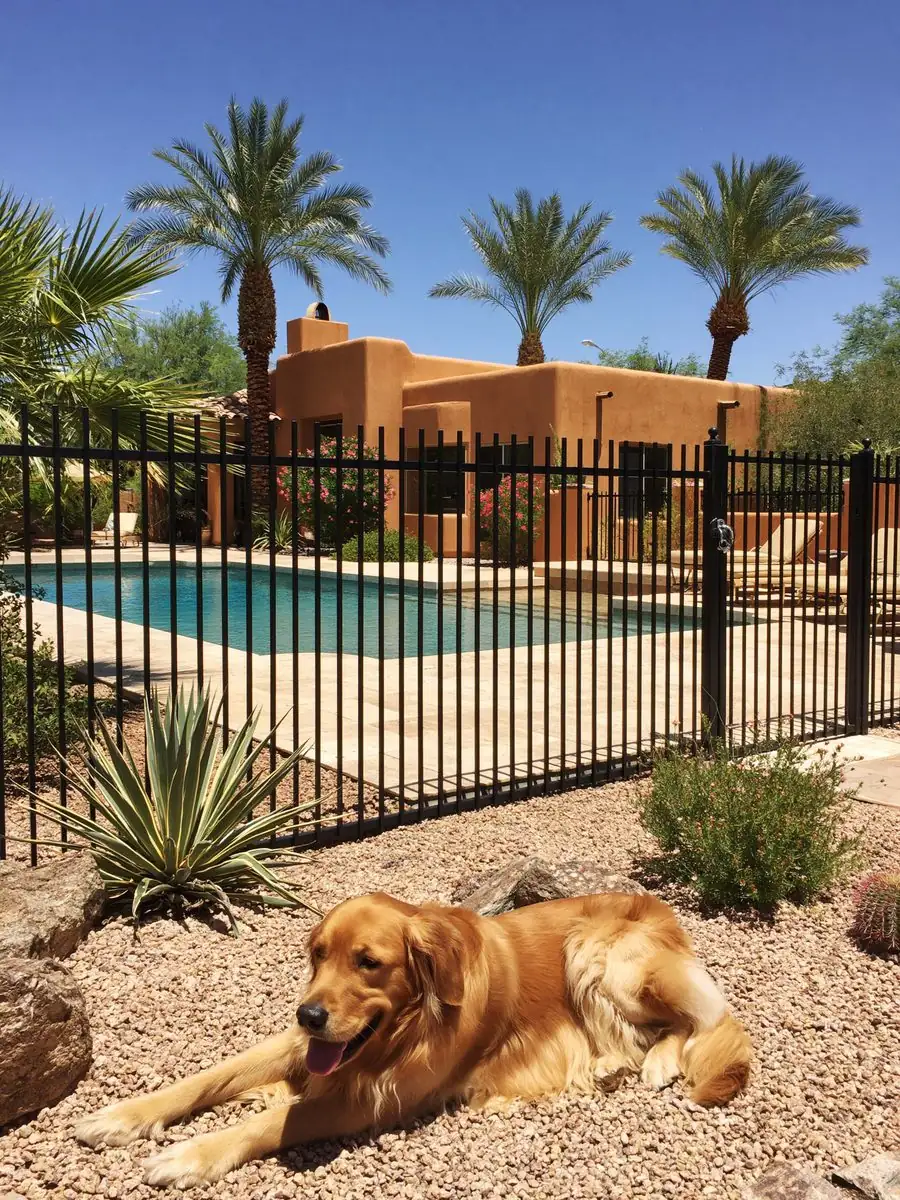
Golden retriever resting on the safe side of a black iron pool fence at a Tempe, AZ home, the gate latched and the pool beyond

Get Your Free Estimate

Tell us what is around the pool now and what the gate is doing. Photos help. Someone comes out, walks the whole enclosure, and gives you a firm price in writing. No cost, and no obligation to book the work. Call (480) 470-8551 or fill out the form.

The gate is the part that fails first.

Call (480) 470-8551